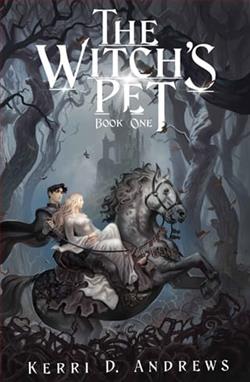
Kerri Andrews' The Witch's Pet is a captivating exploration of power dynamics, identity, and the struggle for autonomy set against a richly woven tapestry of fantasy and intrigue. This novel is a compelling addition to the genre, offering readers a fresh take on the classic themes of captivity and freedom, love and enmity, and the eternal battle between light and darkness.
The story begins with a stark and evocative image: Pandora, a young woman shackled and offered as a sacrifice to the Witch, a figure shrouded in fear and mystery. This opening sets the tone for a narrative that is as much about the internal struggles of its characters as it is about the external conflicts they face. Andrews crafts a world that is both familiar and otherworldly, drawing readers into a kingdom where magic is both a gift and a curse, and where the walls that confine are as much psychological as they are physical.
Pandora is a protagonist who immediately captures the reader's empathy. Her journey from a symbol of punishment to a figure of strength and self-discovery is both poignant and inspiring. Andrews skillfully portrays Pandora's internal conflict as she grapples with her imposed identity as a "devil" and "monster," and her desire to break free from the chains—both literal and metaphorical—that bind her. Her evolution is marked by a growing awareness of her own power and the realization that the darkness within her is not something to be feared, but rather understood and harnessed.
Prince Sitri, Pandora's captor and reluctant protector, is a complex character whose development is intricately tied to Pandora's own. Initially presented as a cold and distant figure, Sitri's layers are gradually peeled back to reveal a man burdened by duty and expectation. His relationship with Pandora is fraught with tension and mistrust, yet it is through their interactions that both characters begin to confront their own prejudices and fears. Andrews deftly navigates the delicate balance between captor and captive, allowing their relationship to evolve in a way that feels both organic and inevitable.
The themes of power and control are central to The Witch's Pet, and Andrews explores these concepts with a nuanced and thoughtful approach. The kingdom behind the Wall is a place where magic dictates social hierarchy, and those without it are marginalized and oppressed. Pandora's struggle to assert her own agency in a world that seeks to define her by her lack of magic is a powerful commentary on the nature of power and the ways in which it can be both wielded and resisted. The novel raises important questions about identity and autonomy, challenging readers to consider the ways in which societal structures can shape and constrain individual lives.
Andrews' prose is both lyrical and precise, capturing the beauty and brutality of her world with equal skill. Her descriptions of the kingdom and its inhabitants are vivid and immersive, drawing readers into a landscape that is as enchanting as it is dangerous. The pacing of the novel is well-balanced, with moments of introspection and character development interspersed with scenes of action and suspense. This careful structuring ensures that the narrative remains engaging and dynamic throughout.
In comparison to other works in the fantasy genre, The Witch's Pet stands out for its focus on character development and thematic depth. While it shares some similarities with novels like Naomi Novik's Uprooted or Sarah J. Maas' A Court of Thorns and Roses, Andrews' work is distinguished by its emphasis on the psychological and emotional journeys of its characters. The novel's exploration of the interplay between magic and identity, and its examination of the ways in which power can be both oppressive and liberating, offer a fresh perspective that is both thought-provoking and resonant.
Overall, The Witch's Pet is a compelling and beautifully crafted novel that will appeal to fans of fantasy and character-driven stories alike. Kerri Andrews has created a world that is rich in detail and emotion, populated by characters who are as complex and multifaceted as the themes they embody. This is a book that invites readers to question their own assumptions about power, identity, and the nature of freedom, and it is a journey well worth taking.
For those interested in exploring the depths of human emotion and the complexities of power dynamics within a fantastical setting, The Witch's Pet is a must-read. It is a story that lingers long after the final page is turned, leaving readers with much to ponder and reflect upon.



