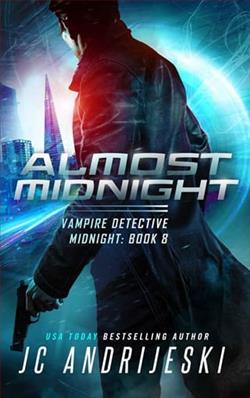
J.C. Andrijeski's Almost Midnight serves as the thrilling conclusion to the Vampire Detective Midnight series, a saga that has captivated readers with its unique blend of science fiction, mystery, and romance. Set against the backdrop of a dystopian New York, the novel explores themes of identity, freedom, and the struggle for coexistence in a world still reeling from the aftermath of a devastating race war.
At the heart of the story is Nick Tanaka, a vampire detective known as a "Midnight," who is bound to the human police force. Nick's character is a compelling study of duality and conflict. He is a vampire owned by humans, a detective who must navigate the murky waters of loyalty and survival. Andrijeski crafts Nick with a depth that makes him both relatable and enigmatic. His internal struggle between his desire for freedom and his duty as a detective is palpable, drawing readers into his world of moral ambiguity and emotional turmoil.
The novel begins with a gripping scene where Nick is on the verge of escaping through a dimensional door, only to have his hopes dashed by the racial authorities. This moment sets the tone for the rest of the book, highlighting the pervasive tension between vampires and humans. The societal dynamics in Almost Midnight are reminiscent of other dystopian works, such as Octavia Butler's Fledgling and Charlaine Harris's Sookie Stackhouse series, where the coexistence of different races and species is fraught with conflict and prejudice.
Andrijeski's world-building is meticulous, painting a vivid picture of a futuristic New York that is both familiar and alien. The vampire ghetto, where much of the action takes place, is a stark reminder of the segregation and discrimination that pervades this society. The author uses this setting to explore broader themes of oppression and resistance, making the novel not just a thrilling read but also a thought-provoking commentary on real-world issues.
As Nick investigates a double homicide at the edges of the vampire ghetto, he is drawn into a web of intrigue that forces him to confront his past. This subplot adds layers to Nick's character, revealing a history he has long tried to forget. The gradual unveiling of Nick's backstory is handled with finesse, keeping readers engaged and invested in his journey. Andrijeski's ability to weave together past and present narratives is reminiscent of the storytelling techniques used by authors like Anne Rice in her Vampire Chronicles, where the protagonist's history is integral to their current identity.
The supporting characters in Almost Midnight are equally well-developed, each contributing to the novel's rich tapestry. The interactions between vampires, humans, and psychics add complexity to the narrative, highlighting the fragile alliances and deep-seated animosities that define this world. Andrijeski excels at creating characters who are morally complex, challenging readers to question their own perceptions of right and wrong.
One of the novel's strengths is its exploration of the theme of memory and identity. As Nick begins to remember his past, he is forced to reconcile the person he was with the person he has become. This internal conflict is a powerful driving force in the narrative, adding emotional depth and resonance. The idea of memory as both a burden and a source of strength is a recurring motif, echoing the works of authors like Neil Gaiman, who often explore the interplay between past and present in their stories.
In terms of pacing, Almost Midnight strikes a balance between action and introspection. The plot unfolds with a sense of urgency, propelled by the looming threat of another race war. Yet, Andrijeski also allows for moments of quiet reflection, giving readers the opportunity to delve deeper into the characters' psyches. This balance ensures that the novel is both a page-turner and a thoughtful exploration of its themes.
The novel's conclusion is both satisfying and poignant, bringing Nick's journey to a close while leaving room for reflection on the broader implications of the story. Andrijeski does not shy away from the harsh realities of the world she has created, offering a resolution that is both hopeful and realistic. This nuanced ending is a testament to her skill as a storyteller, leaving readers with much to ponder long after the final page is turned.
In conclusion, Almost Midnight is a fitting end to the Vampire Detective Midnight series, offering a compelling blend of mystery, romance, and social commentary. J.C. Andrijeski has crafted a world that is both fantastical and eerily reflective of our own, populated by characters who are as complex as they are captivating. For fans of dystopian fiction and vampire lore, this novel is a must-read, offering a fresh perspective on familiar themes and leaving a lasting impact.



