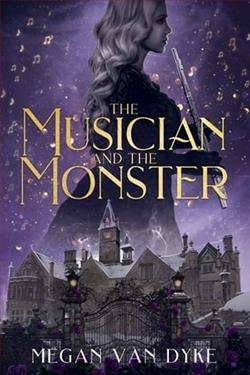
Megan Van Dyke's The Musician and the Monster is a captivating retelling that deftly weaves elements of Beauty and the Beast and Phantom of the Opera into a rich tapestry of gaslamp fantasy and gothic allure. This novel is a compelling exploration of love, redemption, and the transformative power of music, set against the backdrop of a world teetering on the edge of darkness.
At the heart of the story is Ceridwen Kinsley, a young woman whose life is marked by loss and longing. Her nightly ritual of playing music on her rooftop for her deceased mother is both poignant and haunting, a testament to the novel's exploration of music as a language of the soul. Van Dyke uses this motif to great effect, illustrating how music can convey emotions and truths that words often fail to express. This theme resonates throughout the book, serving as a bridge between characters and a balm for their wounds.
The narrative takes a thrilling turn when Ceridwen witnesses a murder committed by a creature that defies human understanding. This encounter thrusts her into the path of Drystan Winterbourne, the enigmatic Lord Protector of Teneboure. Drystan is a character shrouded in mystery and burdened by duty, his life a constant battle against the monstrous forces threatening his city. Van Dyke skillfully develops Drystan's character, peeling back layers of his gruff exterior to reveal a man haunted by his failures and desperate for redemption.
The dynamic between Ceridwen and Drystan is one of the novel's most compelling aspects. Initially, Ceridwen is wary of Drystan's unkempt appearance and brusque manner, yet she is drawn to the vulnerability he hides beneath his stern facade. Their relationship evolves from a transactional arrangement—where Ceridwen's music serves as a salve for Drystan's magical affliction—into a deep and abiding connection. Van Dyke captures this transformation with nuance and sensitivity, allowing their bond to develop organically as they confront their fears and desires.
As the story unfolds, Van Dyke introduces a host of secondary characters who enrich the narrative and add depth to the world of Teneboure. The city itself is a character, its gaslit streets and shadowy corners evoking a sense of foreboding and mystery. The author's attention to detail in crafting this setting is commendable, immersing readers in a world that feels both familiar and fantastical.
One of the novel's strengths is its exploration of class and societal expectations. Ceridwen's impoverished background and Drystan's noble status create a tension that underscores their interactions. Van Dyke uses this tension to challenge the characters' preconceived notions and highlight the arbitrary nature of social divisions. As Ceridwen and Drystan's relationship deepens, the barriers between them begin to crumble, illustrating the novel's message that love and understanding can transcend societal constraints.
The novel's pacing is well-balanced, with moments of introspection interspersed with action and suspense. Van Dyke maintains a steady tension throughout, keeping readers engaged as Ceridwen and Drystan face not only the external threat of the monster but also the internal struggles that threaten to tear them apart. The revelation of secrets and the unmasking of hidden enemies add layers of intrigue, culminating in a climax that is both satisfying and emotionally resonant.
In comparison to other retellings, such as those by Hannah Whitten and Tessonja Odette, Van Dyke's work stands out for its atmospheric world-building and the depth of its character development. While it shares thematic similarities with Stephanie Garber's fairy tale-inspired narratives, The Musician and the Monster carves its own niche with its unique blend of gothic elements and the central role of music.
Overall, The Musician and the Monster is a beautifully crafted tale that will appeal to fans of romantic and atmospheric retellings. Megan Van Dyke has created a world that is both enchanting and perilous, populated by characters who are as complex as they are compelling. This novel is a testament to the enduring power of love and the redemptive potential of music, offering readers a story that lingers long after the final note has been played.



