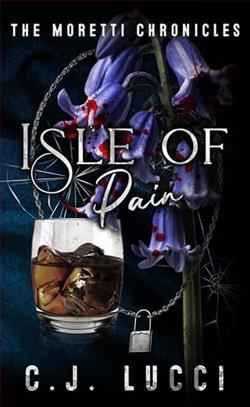
C.J. Lucci's Isle of Pain is a gripping exploration of obsession, loss, and redemption set against the backdrop of a dark, character-driven mafia romance. The novel delves deep into the psyche of its protagonists, Marie and Nico, offering readers a raw and unfiltered look at the complexities of human emotion and the lengths to which people will go to find solace in one another.
The story begins with Marie, a woman who has lived a life shrouded in darkness and isolation. Her twin sister was her anchor, her confidante, and her everything. But with her sister's loss, Marie finds herself adrift, grappling with the responsibilities of being a new mother while haunted by her past. The blurb hints at a "dark secret," which adds an intriguing layer to her character, making readers eager to uncover the depths of her pain and the nature of her secret.
Enter Nico, a man who is no stranger to death and darkness. His fascination with Marie is immediate and intense. He sees in her a reflection of his own struggles and desires, and this connection forms the crux of their tumultuous relationship. Nico's character is complex; he is both a protector and a predator, driven by a selfish need to possess Marie while simultaneously wanting to save her from herself.
Lucci's writing is evocative, painting vivid pictures of the emotional landscapes her characters inhabit. The Isle of Pain is not just a physical setting but a metaphorical one, representing the internal struggles and emotional turmoil that both Marie and Nico endure. The author's ability to weave these themes into the narrative is commendable, making the novel not just a romance but a profound exploration of the human condition.
One of the standout aspects of Isle of Pain is its character development. Marie and Nico are not mere archetypes of the romance genre; they are fully fleshed-out individuals with their own fears, desires, and motivations. Marie's journey from a woman consumed by grief and guilt to someone who finds strength in vulnerability is particularly compelling. Her relationship with Nico is fraught with tension and passion, and Lucci does an excellent job of portraying the push and pull between them.
Nico, on the other hand, is a character who defies easy categorization. He is both a savior and a sinner, a man who is willing to risk everything for the woman he loves, even if it means confronting his own demons. His obsession with Marie is both his greatest strength and his greatest weakness, and this duality adds depth to his character.
The novel's themes of obsession and redemption are reminiscent of works by authors like Sylvia Day and E.L. James, who also explore the darker sides of love and desire. However, Lucci's approach is more nuanced, focusing on the psychological aspects of her characters' relationships rather than just the physical. This makes Isle of Pain a standout in the genre, appealing to readers who crave more than just a surface-level romance.
It's important to note that Isle of Pain contains dark themes and explicit content, as mentioned in the author's note. This is not a light-hearted romance, and readers should be prepared for an intense and sometimes unsettling journey. The inclusion of a Trigger Warnings page is a thoughtful touch, allowing readers to make informed decisions about their reading experience.
Overall, Isle of Pain is a powerful and emotionally charged novel that will resonate with fans of dark romance. C.J. Lucci has crafted a story that is both haunting and hopeful, a testament to the resilience of the human spirit and the transformative power of love. For those willing to brave the Isle of Pain, the reward is a deeply satisfying and ultimately uplifting tale of two broken souls finding healing in each other.
In conclusion, if you're a fan of character-driven narratives that delve into the complexities of love and obsession, Isle of Pain is a must-read. Its rich character development, evocative writing, and exploration of dark themes make it a standout in the genre, offering a reading experience that is both challenging and rewarding.



