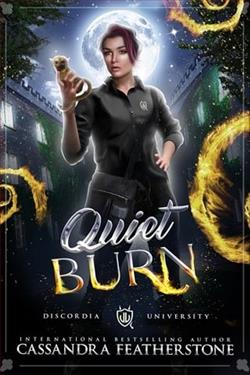
Cassandra Featherstone's Quiet Burn is a thrilling dive into a world where the boundaries between identity, power, and survival are constantly tested. The novel's premise is both intriguing and daring, setting the stage for a narrative that is as much about self-discovery as it is about navigating a perilous environment. The protagonist's journey is a compelling exploration of gender identity, societal expectations, and the struggle for acceptance in a world that is both fantastical and eerily reflective of our own.
At the heart of Quiet Burn is the protagonist's bold decision to disguise herself as a boy to attend Discordia, an all-demon university. This choice immediately sets the tone for a narrative filled with tension and suspense. The stakes are raised with the announcement of The Caliphate Games, a deadly competition that our protagonist is thrust into, despite not being the typical candidate. This element of the story is reminiscent of other popular fantasy series, such as Suzanne Collins' The Hunger Games, where survival is not just a physical challenge but a psychological one as well.
The character development in Quiet Burn is one of its standout features. The protagonist is a richly layered character, grappling with her identity and the secrets she must keep to survive. Her interactions with the seven demon hybrids, who are bound to her by ancient ritual magic, add depth to the narrative. Each of these characters is distinct, with their own motivations and personalities, creating a dynamic group dynamic that is both entertaining and complex. The tension between the protagonist and Jasper, the snarky, brooding prince, is particularly well-crafted, adding a layer of romantic tension that is both engaging and fraught with potential consequences.
Featherstone's writing shines in her ability to weave together themes of identity, power, and belonging. The protagonist's struggle with her emerging powers and the mystery of her origins is a powerful metaphor for the journey of self-discovery that many young adults face. The novel deftly explores the idea that understanding who we are is a journey fraught with challenges and that the truth can be both liberating and dangerous.
The setting of Discordia is vividly imagined, with its own set of rules and hierarchies that mirror the complexities of our own world. The headmaster's sinister schemes and the looming threat of the royal families' brawl add layers of intrigue and danger to the narrative. Featherstone's world-building is meticulous, creating a setting that feels both fantastical and grounded in reality.
One of the most compelling aspects of Quiet Burn is its exploration of gender identity and the societal expectations placed on individuals. The protagonist's decision to disguise herself as a boy is not just a plot device but a commentary on the limitations and pressures faced by women in male-dominated spaces. This theme is handled with sensitivity and nuance, making it a thought-provoking read for audiences interested in gender studies and social commentary.
Comparatively, Quiet Burn shares thematic similarities with other works in the fantasy genre that explore identity and power dynamics, such as Sarah J. Maas's Throne of Glass series and Leigh Bardugo's Shadow and Bone. However, Featherstone's novel stands out for its unique blend of humor, romance, and suspense, creating a narrative that is both entertaining and thought-provoking.
In conclusion, Quiet Burn is a captivating read that offers a fresh take on the fantasy genre. Its exploration of identity, power, and belonging is both timely and timeless, making it a must-read for fans of fantasy and young adult fiction. Featherstone has crafted a story that is as much about the external battles we face as it is about the internal ones, leaving readers eagerly anticipating what comes next in this thrilling series.



