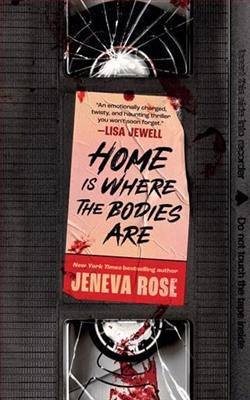
Jeneva Rose's Home Is Where the Bodies Are is a gripping family thriller that delves into the complexities of familial relationships and the haunting nature of buried secrets. Known for her previous works like The Perfect Marriage and You Shouldn’t Have Come Here, Rose once again crafts a narrative that keeps readers on the edge of their seats, blending suspense with emotional depth.
The story begins with the reunion of three estranged siblings—Beth, Nicole, and Michael—after the death of their mother. Each sibling carries their own baggage: Beth, the dutiful daughter who never left home; Nicole, battling a serious drug addiction; and Michael, who has distanced himself from the family and their small Wisconsin town. This setup immediately establishes a rich tapestry of character dynamics, setting the stage for the unfolding drama.
As the siblings sort through their mother's estate, they stumble upon a collection of home videos. What starts as a nostalgic trip down memory lane quickly turns into a chilling discovery. A VHS tape from 1999 reveals their father covered in blood, a dead body, and a pact between their parents to dispose of it. This shocking revelation forces the siblings to confront the dark secret their mother took to her grave.
One of the most compelling aspects of the novel is its exploration of family dynamics. Rose expertly portrays the tension and unresolved issues between the siblings. Beth's resentment towards her siblings for leaving her to care for their mother, Nicole's struggle with addiction and her desire for redemption, and Michael's internal conflict about returning to a past he tried to escape all add layers of complexity to the narrative. These characters are not just vehicles for the plot; they are fully realized individuals with distinct voices and motivations.
The theme of memory and its unreliability is central to the story. The VHS tape serves as a catalyst for the siblings to question their past and the narratives they've constructed about their family. This theme is reminiscent of works like Gillian Flynn's Sharp Objects, where the past is a puzzle that the protagonist must piece together to understand the present. Rose's handling of this theme is both subtle and effective, as she weaves it into the characters' personal journeys and the overarching mystery.
Another significant theme is the idea of home and what it represents. The title itself, Home Is Where the Bodies Are, suggests a duality—home as a place of comfort and safety, but also a repository of secrets and trauma. This duality is mirrored in the siblings' relationship with their childhood home, which becomes a character in its own right. The house is a physical space filled with memories, both cherished and haunting, and it serves as a backdrop for the unfolding drama.
Rose's writing style is engaging and accessible, with a keen eye for detail that brings the setting and characters to life. Her ability to build suspense is evident throughout the novel, as she carefully unravels the mystery at the heart of the story. The pacing is well-balanced, with moments of tension interspersed with quieter, introspective scenes that allow for character development.
In comparison to other family thrillers, such as Liane Moriarty's Big Little Lies or Shari Lapena's The Couple Next Door, Rose's novel stands out for its focus on the psychological aspects of family relationships. While the mystery is central to the plot, it is the exploration of the siblings' emotional landscapes that gives the story its depth and resonance.
Overall, Home Is Where the Bodies Are is a compelling and thought-provoking read that will appeal to fans of psychological thrillers and family dramas alike. Jeneva Rose has crafted a story that is both entertaining and emotionally resonant, with characters that linger in the mind long after the final page is turned. For readers seeking a thriller that goes beyond the surface to explore the intricacies of family and memory, this novel is a must-read.



