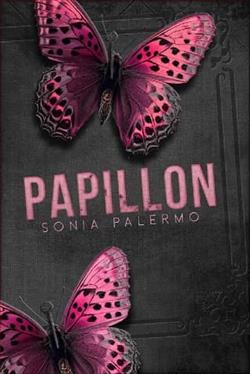
Sonia Palermo's Papillon is a hauntingly beautiful exploration of despair, redemption, and the transformative power of unexpected connections. The novel weaves together the lives of two seemingly disparate characters, Millie and Zain, whose paths cross in a way that challenges their perceptions of life and death. Through its compelling narrative and richly drawn characters, Papillon delves into themes of grief, healing, and the delicate balance between mortality and the ethereal.
At the heart of the story is Millie, a young woman whose life has been marred by tragedy and loss. Her world, as she describes, ended long before the year 2012, and she has been living in a state of suspended animation, trapped in a metaphorical glass jar. Millie's character is a poignant representation of someone grappling with profound grief and the scars it leaves behind. Her struggle with mental health and her repeated attempts to end her life are depicted with raw honesty, making her a deeply relatable and sympathetic character. Palermo's portrayal of Millie's internal battles is both sensitive and unflinching, offering readers a window into the complexities of living with depression and suicidal ideation.
Enter Zain, a mysterious figure whose role as a guide for lost souls adds a supernatural dimension to the narrative. Zain's character is intriguing, as he embodies the intersection of life and death. His duty is to prepare souls for rebirth, yet he finds himself drawn to Millie in a way that defies his own rules. The dynamic between Millie and Zain is both captivating and thought-provoking, as it raises questions about the nature of love, destiny, and the possibility of redemption. Zain's perspective offers a unique lens through which to view Millie's journey, and his own internal conflict adds depth to his character.
The novel's title, Papillon, which means "butterfly" in French, is a fitting metaphor for the themes of transformation and rebirth that permeate the story. Just as a butterfly emerges from its chrysalis, Millie's journey is one of gradual awakening and self-discovery. The symbolism of the butterfly is woven throughout the narrative, serving as a reminder of the potential for beauty and change even in the darkest of circumstances.
Palermo's writing is both lyrical and evocative, capturing the emotional nuances of her characters with precision and grace. Her prose is imbued with a sense of melancholy, yet it is also infused with moments of hope and light. The author's ability to convey the intricacies of human emotion is one of the novel's greatest strengths, as it allows readers to connect with the characters on a deeply personal level.
In terms of character development, both Millie and Zain undergo significant transformations over the course of the novel. Millie's journey from a place of despair to one of acceptance and healing is portrayed with authenticity and sensitivity. Her interactions with Zain serve as a catalyst for her growth, challenging her to confront her fears and embrace the possibility of a future beyond her pain. Zain, on the other hand, is forced to reevaluate his own beliefs and priorities as he grapples with his feelings for Millie. His character arc is a testament to the power of love and connection to transcend even the most rigid of boundaries.
The novel's exploration of themes such as grief, mental health, and the afterlife is both timely and timeless. In a world where discussions about mental health are becoming increasingly important, Papillon offers a compassionate and nuanced portrayal of the struggles faced by those dealing with depression and suicidal thoughts. The inclusion of a supernatural element adds an intriguing layer to the narrative, inviting readers to ponder the mysteries of life and death and the possibility of an existence beyond the physical realm.
Comparatively, Papillon shares thematic similarities with works such as Mitch Albom's The Five People You Meet in Heaven and Alice Sebold's The Lovely Bones. Like these novels, Palermo's story delves into the afterlife and the impact of human connections on the soul's journey. However, Papillon distinguishes itself through its focus on mental health and the deeply personal nature of Millie's struggle. The novel's blend of realism and fantasy creates a unique reading experience that is both thought-provoking and emotionally resonant.
Overall, Sonia Palermo's Papillon is a beautifully crafted novel that offers a poignant exploration of the human condition. Through its richly developed characters and evocative prose, the book invites readers to reflect on the nature of life, death, and the transformative power of love. It is a story that lingers in the mind long after the final page is turned, leaving readers with a renewed appreciation for the fragility and resilience of the human spirit.



