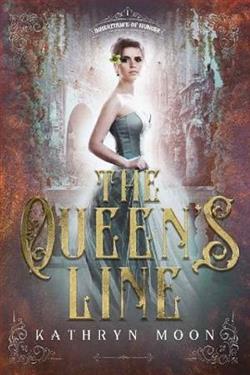
The Queen's Line by Kathryn Moon is a captivating fantasy novel that immerses readers in the richly imagined Kingdom of Kimmery, where magic, politics, and personal ambition intertwine in a tale of love, sacrifice, and self-discovery. The story centers around Bryony, the Princess of Kimmery, who grapples with a profound secret: she lacks the Hunger, a magical craving that is essential for the prosperity of her kingdom and the legitimacy of her claim to the throne. This central conflict not only drives the narrative but also serves as a poignant metaphor for the struggles of identity and belonging.
The novel opens with Bryony on the cusp of her Choosing ceremony, an event that will determine her future and the fate of Kimmery. The ceremony involves selecting Chosen—men who will satiate her Hunger and, in turn, bolster the kingdom's magic. The diverse cast of characters she assembles—a prince, an ambassador, a stablehand, a sculptor, and a rogue—each brings their own complexities and motivations to the story. This ensemble not only enriches the plot but also allows for a nuanced exploration of relationships and power dynamics.
One of the most compelling aspects of The Queen's Line is its exploration of themes of power and responsibility. Bryony’s journey is not just about her personal desires but also about her duty to her people. As she navigates her relationships with her Chosen, she learns that true leadership requires more than just magical prowess; it demands empathy, understanding, and the courage to confront uncomfortable truths. This theme resonates deeply in today’s world, where leaders are often judged not only by their abilities but also by their character and integrity.
Character development is another strong point in Moon's writing. Bryony is a well-rounded protagonist whose internal struggles are relatable and compelling. Her initial feelings of inadequacy and fear of failure are palpable, making her journey toward self-acceptance and empowerment all the more impactful. As she interacts with her Chosen, we see her evolve from a princess burdened by her secret into a determined leader willing to fight for her kingdom’s future. Each of her Chosen also undergoes significant development, revealing their own vulnerabilities and desires, which adds layers to the narrative and keeps readers invested in their fates.
The setting of Kimmery is vividly described, with Moon’s world-building skills shining through. The stark contrast between the opulence of the capital and the desolation of the northern regions underscores the kingdom's struggles and Bryony’s mission to restore balance. The Winter palace, where much of the story unfolds, serves as a haunting backdrop that mirrors Bryony’s internal conflict. The atmosphere is thick with tension and uncertainty, enhancing the stakes of Bryony’s quest and the secrets that threaten to unravel everything she holds dear.
Moon’s writing style is engaging and immersive, with a lyrical quality that draws readers into the emotional landscape of the characters. The dialogue is sharp and often laced with humor, providing moments of levity amidst the darker themes. The romantic elements are well-crafted, with Bryony’s relationships with her Chosen developing organically and adding depth to the narrative. The chemistry between Bryony and her Chosen is palpable, and the exploration of their dynamics raises questions about love, loyalty, and the sacrifices one must make for the greater good.
As Bryony delves deeper into her kingdom’s issues, the plot thickens with political intrigue and unexpected twists. The revelation of her secret and the subsequent challenges she faces serve as a catalyst for her growth, pushing her to confront not only her fears but also the harsh realities of her kingdom. The pacing of the story is well-balanced, with moments of tension interspersed with quieter, introspective scenes that allow for character reflection and development.
In comparison to other works in the fantasy genre, The Queen's Line stands out for its focus on the emotional and psychological aspects of leadership. While many fantasy novels emphasize epic battles and grand quests, Moon’s narrative is more intimate, exploring the intricacies of personal relationships and the burdens of responsibility. Readers who enjoy character-driven stories with rich world-building will find much to appreciate in this novel.
Overall, The Queen's Line is a thought-provoking and beautifully written tale that explores the complexities of power, identity, and love. Kathryn Moon has crafted a story that resonates on multiple levels, making it a must-read for fans of fantasy and romance alike. Bryony’s journey is one of resilience and growth, and her determination to reclaim her kingdom’s glory will leave readers cheering for her success. This novel is not just a story about magic and royalty; it is a profound exploration of what it means to truly lead and love.



