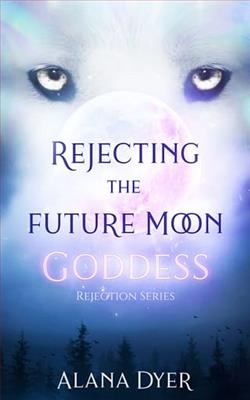
Rejecting the Future Moon Goddess by Alana Dyer is a compelling entry into the fantasy romance genre, blending mythical themes with a modern twist that both delights and enlightens. Set in an intricately constructed world where deities and mortals coexist, Dyer’s novel explores themes of destiny, autonomy, and the complexities of love and power. The tale centers on Elara, a young woman poised to become the Moon Goddess, who must navigate her path amidst foreseen and chosen realities. Through her, Dyer queries the possibility of reshaping one’s destiny while being entwined with divine prophecies.
The story opens in the ethereal realms of Lunara, where Elara, the protagonist, is introduced to readers as not only a celestial heir apparent but also as an intensely relatable character. Her fears, doubts, and rebellious streak paint a portrait of a soon-to-be goddess who is as much at war with herself as she is with the expectations placed upon her celestial shoulders. Elara’s rejection of her foretold fate sets the stage for a scintillating saga that cleverly uses fantasy elements to dissect human emotions and choices.
Dyer’s writing shines brightest when detailing the intricate relationships that form the backbone of the narrative. The romantic tension between Elara and her guardian, Kale, is particularly noteworthy. Kale, torn between his duty to protect and his burgeoning forbidden feelings, is portrayed with a depth that adds a layer of intrigue to the romance. The dynamics between the two evolve exquisitely, from subtle glimpses of affection to a tumultuous affair that threatens to undo both their worlds. Their relationship, marked by both tenderness and a fiercely protective love, challenges the strictures of their respective roles—Kale as a guardian and Elara as a deity-to-be.
Throughout the novel, Dyer deftly explores the dichotomy of power and vulnerability. Elara’s ascent to power as the Moon Goddess is depicted not merely as a journey of spiritual and celestial enhancement but also as one of profound personal vulnerability. This juxtaposition is cleverly mirrored in the novel’s setting—the ethereal, almost timeless realm of Lunara contrasted starkly with the terse, often harsh realities of mortal worlds. The vivid descriptions of these realms serve to immerse the reader fully into Elara’s world, bringing to life the beauty and peril of Dyer’s universe.
Rejecting the Future Moon Goddess also excels in its commentary on fate and free will. The tension between predestined paths and personal choices pulses at the heart of the narrative, questioning the very nature of destiny. Is it an unalterable set of events, or can it be redirected by the sheer force of will and heart? Dyer addresses this age-old question not only through Elara’s struggles but also through the supporting characters who each share their slice of defiance against the destinies handed to them. These side narratives enrich the main story, providing broader social and emotional contexts.
However, where the book stumbles slightly is in its pacing. Some parts of the story, especially in the middle, feel drawn out, as if the tension is manufactured rather than naturally evolving from the story’s progression. This minor flaw is largely overshadowed by the compelling characters and the overarching story, but it does momentarily pull the reader out of an otherwise immersive experience. Additionally, certain key themes such as sacrifice and redemption are introduced late in the story, which might leave the reader wishing these elements were explored more thoroughly.
The conclusion of the novel is both satisfying and provocative. Without giving away spoilers, it can be said that Dyer crafts an ending that is both a resolution and a beginning, promising more layers to be explored, possibly hinting at a sequel. It leaves the reader pondering the true extent of Elara’s powers and decisions, and whether true autonomy can ever be achieved in the face of divine intervention.
In sum, Rejecting the Future Moon Goddess is a deeply engaging tale that captivates with its rich character development and a well-constructed mythological world. Alana Dyer delivers a potent mix of romance and fantasy, challenging the boundaries between predetermined destiny and self-determination. It’s a must-read for fans of the genre and anyone who delights in stories of gods and mortals mingled with profound, personal journeys. The novel not only promises an escape into an enchanting world but also provides a thoughtful reflection on the power dynamics of love and destiny.



