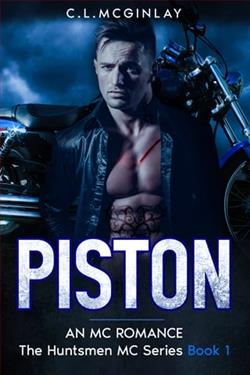
Piston, authored by Charlotte McGinlay, is an evocative and ambitious work that straddles several genres, integrating elements of thriller, science fiction, and romance into a seamless narrative. This novel isn’t just a mere exploration of its thematic tapestry but rather a profound dive into the complexities of human emotions, technological advancements, and the irreversible impacts of both on our societal fabric.
The narrative of Piston is intricately constructed around the life of Isabel Carter, a robotics engineer who is pioneering in her field. Set against the backdrop of a near-future urban landscape, McGinlay artfully depicts a world where artificial intelligence isn’t just a tool but a pervasive reality. The central plot begins to thicken when Isabel creates "Piston," an android so sophisticated that it blurs the indistinct lines between machine and human, raising poignant questions about consciousness and the ethics of creating sentient machines.
McGinlay’s portrayal of Isabel is both rich and compelling. Through Isabel, readers explore not just the life of a woman in a high-stakes, male-dominated field, but also her personal turmoils and triumphs. As the creator of Piston, Isabel faces ethical dilemmas that challenge her professional integrity and personal morals. The character’s depth is accentuated by her vulnerable reflections and complex relationships, particularly with her mentor-turned-rival, Jonathan Pryce, whose own ambitions create a thrilling tension that drives much of the narrative forward.
The novel excels in its exploratory themes of artificial intelligence and the moral ramifications of AI development. What makes Piston stand out is its balanced critique on the potential of AI to both revolutionize and destabilize human civilization. McGinlay doesn’t just present technological innovation as a linear path toward progress but probes into the philosophical and ethical conundrums posed by such advancements. This reflective questioning is mirrored in Isabel’s internal conflicts, as well as in the broader societal reactions depicted throughout the book.
Another commendable aspect of McGinlay’s writing is the dynamic pacing of the plot. She adeptly juggles the technical descriptions of AI development with adrenaline-pumping sequences that have tangible stakes. This blend not only captivates the reader but also fortifies the narrative’s foundation, making the thematic explorations all the more impactful. Furthermore, McGinlay’s prose is both crisp and evocative, painting vivid pictures of the settings and the psychological landscapes of her characters.
The science fiction elements are meticulously researched, presenting a plausible future scenario that is both innovative and eerily prescient. The author’s background knowledge is palpable, as she details the mechanisms of AI in ways that are both scientifically accessible and crucially relevant to the plot’s progression. This attention to detail does not overshadow the human element; instead, it enhances the emotional resonance of the novel, lending credence to the characters’ experiences and decisions.
One might argue that Piston occasionally delves too deeply into the philosophical, which might detract from the pacing for some readers. However, these moments are crucial in setting apart McGinlay’s work from typical genre fiction, as they encourage readers to ponder deeply about the future of humanity in an AI-driven world. The philosophical discourse embedded within the dialogues and Isabel’s contemplations enrich the narrative, providing layers that are intellectually stimulating and profoundly meaningful.
Romance also plays a subtle but significant role in the story. Isabel’s evolving relationship with another key character allows McGinlay to explore yet another facet of her protagonist’s life—her capacity for love and vulnerability. This subplot is delicately woven into the larger narrative, providing a refreshing counterbalance to the heavier scientific and ethical themes. In managing this, McGinlay demonstrates her prowess in character development and her sensitivity in portraying human relationships.
In conclusion, Piston by Charlotte McGinlay is a commendable novel that successfully blends thought-provoking themes with compelling storytelling. It is a must-read for those intrigued by the implications of AI, woven into a tapestry of gripping narrative and deep character studies. For enthusiasts of science fiction who appreciate a profound narrative that challenges the conventions of the genre, McGinlay’s Piston offers a rich, immersive experience that is both intellectually rewarding and emotionally resonant. The debates it triggers about the future of technology and humanity are sure to linger long after the last page is turned.



