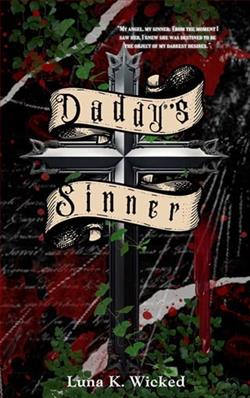
"Daddy's Sinner" by Luna K. Wicked nestles itself within the dark romance genre, a niche that continues to captivate its fervent followers with tales of desire draped in shadows. Wicked does not stray from the elements that enthusiasts of this genre crave; she embeds a compelling blend of mystery, dominance, and taboo that promises to keep readers on the edges of their seats. However, it is essential to approach this review with a mind cognizant of the genre's typical dynamics, characterized often by complex power exchanges and intense emotional trajectories.
The novel centers around Evangeline, a young woman grappling with the remnants of a troubled past that shadows her present. Her character is crafted with deep layers of vulnerability and resilience, making her both a damsel and a fighter. On the other side stands Alexander Wright, the quintessential alpha male with a penchant for control and a past just as haunting. Alexander is not just a powerful, assertive protagonist but also a figure shrouded in enigma. Wicked skilfully constructs a magnetic pull between the protagonists that is palpable through her vivid, emotive prose.
From the onset, the narrative thrusts the reader into a whirlwind of emotions and events with a fast-paced opening scene. Wicked's writing style is engaging, characterized by descriptive details that build a cinematic quality, immersing the reader fully into the settings and the minds of her characters. The dialogues are snappy, often laced with a biting tension that aptly reflects the themes of control and submission that permeate the pages.
Structurally, the novel adheres to a familiar formula seen within dark romances. Herein lies both its strength and its predictable nature. Readers familiar with the genre will recognize the patterns that "Daddy's Sinner" follows: the haunted pasts, the instant yet conflicted attraction, the climax replete with danger and emotional catharsis. Wicked, however, manages to inject novelty with subplots that delve into issues beyond the central romance, such as family dynamics and personal redemption, adding layers to the narrative.
A pivotal element in “Daddy's Sinner” is the use of dual perspectives. This narrative choice deepens the reader's understanding of each protagonist, providing insight not just into their actions but into their psyches. It offers a balanced view that fosters sympathy for both Evangeline and Alexander, despite their flaws and sometimes morally ambiguous choices. It is through these perspectives that Wicked explores themes of consent, power, and freedom, weaving through the complexities with a nuanced hand. Yet, it is also here that some readers might find themselves at a crossroads due to the inherent darkness of the themes discussed.
Language and tone in the book merit mention. Wicked employs a rich, evocative language that often borders on the poetic. In moments of intimacy, her words veer into explicit territory, never shying away from the raw, unvarnished facets of her characters' encounters. This boldness in prose serves the narrative well, accentuating the stark, unapologetic exploration of its themes. However, this same boldness in detailing intimate scenes and power dynamics may not sit comfortably with every reader, underscoring the necessity of a selective audience for this genre.
Regarding the setting, Wicked opts for a backdrop that feels at once timeless and modern, incorporating elements like old wealth and corporate intrigue, which provide a fertile ground for conflicts and power plays. The environments in which the characters interact are depicted with enough detail to spark the imagination yet leaving room for the reader’s own visions to bloom.
In conclusion, "Daddy's Sinner" by Luna K. Wicked is a compelling entry into the dark romance genre that will likely resonate with fans of intense, emotionally charged narratives steeped in complexity. While it navigates through familiar territory, it does so with a level of polish and depth that sets it apart. The emotional rollercoaster it provides, coupled with strong character development and immersive writing, makes it a noteworthy read. However, its explorations of dark themes and explicit content make it suitable primarily for an audience attuned to and appreciative of its genre's nuances. For those who relish a deep dive into tumultuous relationships framed by past traumas and a quest for control, "Daddy's Sinner" proves a captivating, if sometimes challenging, journey.