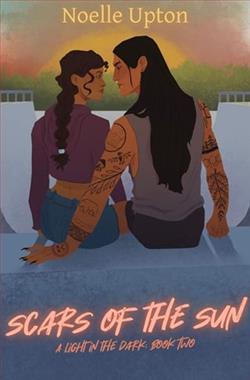
Scars of the Sun by Noelle Upton is a compelling foray into the world of dystopian literature, blending elements of suspense, romance, and a deep exploration of societal structures. The book centers on the protagonist, Elara, a young woman who finds herself caught between the oppressive regime of the Helio Alliance and the rugged, rebellious factions of the Sunlit. Set against a backdrop that vividly illustrates a world ravaged by solar radiation and authoritarian rule, Upton's narrative is both engaging and thought-provoking.
From the opening pages, Upton excels in building a stark, immersive world. The setting is a character in itself, depicted with stark visuals of desolate landscapes and harsh climates shaped by the sun's overwhelming power. This environmental hostility mirrors the tense atmosphere that permeates the book, aligning the natural world with the political turmoil faced by its characters. The author's meticulous attention to detail helps to encapsulate the desperation and suffocation — both literal and figurative — that marks the lives of those under Helio Alliance's thumb.
At its core, Scars of the Sun is a story about resistance and the quest for self-determination. Elara, as the lead, is skillfully crafted. Her journey from a subdued, fearful compliance to a bold, defiant resistance offers a potent narrative of empowerment. However, it is not just the physical battles that captivate the reader, but the internal wars that Elara wages against her fears, doubts, and loyalties. Upton portrays these personal battles with profound introspection, ensuring that Elara is not just seen as a symbol of rebellion, but as a multifaceted character grappling with her path and identity.
Supporting characters are equally well-drawn, offering a plethora of viewpoints and emotional depth to the story. From Kai, Elara's stoic yet tender mentor, to Mira, a fiercely loyal friend with her own complex backstory, Upton populates her world with individuals that add layers to the narrative. Each character brings nuances that challenge Elara's perspective and push her towards growth, making the storyline richer and more intricate.
Upton also delves deeply into the themes of power, control, and manipulation, examining how they manifest through both the ruling authorities and within the resistance movements. The Helio Alliance is not a monolithic evil; instead, it is a nuanced entity with its logic and motivations, which Upton unpacks with skill. The dichotomy between the oppressor and the oppressed is explored not just in their actions but in their ideological battles, making for a compelling analysis of power dynamics.
In terms of plot, Scars of the Sun maintains a brisk pace, incorporating plenty of action sequences that are both thrilling and well-executed. However, where Upton truly excels is in the suspenseful buildup and climactic confrontations that feel both inevitable and surprising. The intersection of personal vendettas, political intrigue, and survival stakes keeps the tension high, making it a page-turner.
What is perhaps most striking about Scars of the Sun is its thematic depth. The narrative does not shy away from asking tough questions about morality, freedom, and the sacrifices required for change. These themes are woven seamlessly into the plot and character development, challenging the reader to ponder them long after the last page is turned.
However, the novel is not without its shortcomings. At times, the romantic subplot can feel somewhat forced, slightly detracting from Elara’s broader personal journey. Additionally, some of the secondary characters could benefit from deeper exploration to fully realize their potential in the narrative.
The prose of Scars of the Sun is another of its strengths. Upton’s writing style is articulate and evocative, capable of conveying complex emotions and scenic details with precision. Her ability to balance descriptive language with dialogue and action is commendable, creating a narrative that is as lyrical as it is engaging.
In conclusion, Scars of the Sun by Noelle Upton is a formidable addition to the dystopian genre. It offers not only a riveting tale of resistance and personal growth but also an incisive commentary on the socio-political structures that govern human behavior. With its well-crafted protagonist, robust supporting characters, and a finely tuned thematic focus, the book stands out both for its entertainment and intellectual provocation. While there are minor blemishes in its execution, they are far outweighed by the novel's significant merits. As such, Scars of the Sun is highly recommended for readers looking for a story that is both thrilling and thoughtful.