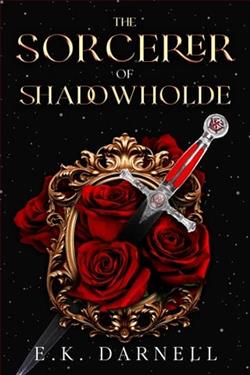
E.K. Darnell's debut novel, The Sorcerer of Shadowholde, plunges readers into an immersive fantasy world grippingly blended with intrigue, magic, and a dash of political theatrics. It is a book that takes the well-worn path of magic and mysticism but adds a fresh layer of depth through its complex characters and meticulously crafted plotlines. Darnell meticulously constructs a universe where magic is not just fantastical but entwined with the everyday lives and the socio-political landscape of the inhabitants of Shadowholde.
At its core, The Sorcerer of Shadowholde centers around the young protagonist, Alaric, who discovers his latent magical abilities in a society where magic is regulated by the overarching authority known as the Magisterium. Unlike typical hero’s journey narratives, Alaric’s path is fraught with moral ambiguities and a profound identity crisis, questioning not just the extent but the ethical implications of his power. The novel excels not only in the grandiosity of its magical battles but in these quiet moments of introspection, making Alaric's personal growth as enthralling as the external conflicts.
The novel’s supporting characters are no mere satellites to Alaric's sun but are luminous in their own right. Mirela, the sharp-witted and fiercely loyal friend, challenges the male-dominated hierarchy with her intelligence and quick thinking. Then there's the enigmatic sorcerer, Lord Verek, whose motives are as obscured as the shadowy halls of his stronghold, Shadowholde. Darnell deftly handles this ensemble cast, ensuring that each character's personal journey and growth mirror the larger thematic concerns of the novel, which include power, responsibility, and the quest for knowledge.
Structurally, Darnell’s writing flows beautifully, adept at detailed, atmospheric descriptions that transport readers directly into the world of Shadowholde. The pacing is nearly perfect, balancing slower, more contemplative sections with sequences of heart-pounding action. However, Darnell’s biggest triumph is perhaps her ability to weave a complex narrative without losing the reader in a labyrinth of details. She cleverly parcels out information through dialogue and exposition, respecting the reader's ability to piece together the subtleties of her world.
The setting of Shadowholde is as much a character as Alaric or Mirela. From the misty, cobblestone streets of Morwall to the majestic, rune-inscribed towers of the Magisterium, each location is realized with vivid detail that speaks to Darnell’s imagination and attention to world-building. Magic in Darnell's world follows an almost scientific method, involving the manipulation of natural elements through a combination of willpower, spoken incantations, and mental acuity, a system that is intriguing yet logically sound within the novel's framework.
Moreover, Darnell does not shy away from the darker elements synonymous with power struggles in a fantasy setting. Betrayals, secret alliances, and the often-blurry line between good and evil are explored with a keen insight, touching upon the real-world relevance of such themes. There's a tangible layer of political commentary woven into the narrative, as Darnell contemplates the role of governance in a world where supernatural abilities can upset the balance of power.
As the plot spirals towards the climax, the threads of individual character arcs and broader political intrigues converge in a masterful display of storytelling. The battle scenes are choreographed with a clarity that makes them easy to visualize without becoming bogged down by excessive detail. However, it is in the moments of quiet victory or defeat that Darnell’s prose shines brightest, conveying the emotional heft of each scene with precision and empathy.
If there's any criticism to be heaped upon The Sorcerer of Shadowholde, it might be directed at the occasional predictability of certain plot twists. Some revelations seem telegraphed chapters in advance, which might reduce their impact for a seasoned reader of fantasy. Nonetheless, these moments are few and far between, and they do little to detract from the overall enjoyment of the story.
In conclusion, The Sorcerer of Shadowholde is a robust and enthralling entry into the fantasy genre by E.K. Darnell. It succeeds not only as an adventure of magical proportions but as a thoughtful examination of power and responsibility. Darnell crafts a world that is as intellectually engaging as it is fantastical, making her novel a recommended read for anyone who cherishes depth and detail in their fantasy sagas. With its intricate plot, dynamic characters, and philosophical underpinnings, The Sorcerer of Shadowholde is poised to become a beloved staple for fans of the genre.



