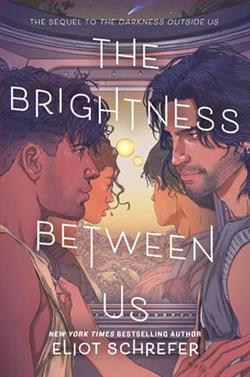
The Brightness Between Us by Eliot Schrefer is a captivating exploration of memory, identity, and the nuanced interplay of love and grief. Schrefer’s prose dazzles as much as it dissects, offering a profound look into the fragile human condition through a compelling narrative and rich, multifaceted characters. This novel manages to be both a tender love story and a poignant examination of the struggles we face in understanding ourselves and each other.
The book centers on Oliver and Kai, two young men whose lives become intertwined when they meet in a contemporary art museum in New York City. Oliver, an art student, is immediately captivated by the enigmatic Kai, whose mysterious past and unspoken woes draw Oliver into a compelling quest to unearth the truths Kai silently battles. Schrefer skillfully uses the art world, with its emphasis on perception and interpretation, as a backdrop to explore the themes of visibility and invisibility that recur throughout the text.
From the outset, Schrefer’s writing style is immediately engaging. He combines lyrical prose with vivid descriptions and insightful dialogues that bring the characters and their emotional landscapes to life. The novel’s strength lies in its depth of character development. Oliver’s journey is depicted with great sensitivity, and his evolving understanding of himself and Kai is portrayed with nuance and complexity. Kai, on the other hand, emerges as an enigmatic figure whose layers are gradually peeled back, revealing the pain and beauty of his storied past.
The narrative structure of The Brightness Between Us also deserves mention. Schrefer uses a dual timeline, oscillating between the present and flashbacks that slowly piece together Kai’s history. This method effectively builds suspense and deepens the reader's empathy towards the characters. Each flashback not only adds a piece to Kai’s elusive puzzle but also reflects the themes of art and memory that echo through every chapter, posing questions about the reliability of our perceptions and the artifices through which we view our lives.
The thematic depth of the novel is most apparent in its exploration of mental health. Schrefer does not shy away from depicting the raw, often painful realities of mental illness. Through Kai’s character, the novel delves into the impacts of trauma and the continuous struggle of living with an unspoken past. The sensitivity with which these subjects are handled is notable; Schrefer respects the complexity of mental health issues and avoids typical clichés, offering instead a portrayal that is both empathetic and honest.
The novel also benefits from its supporting cast, which includes a range of well-drawn characters from diverse backgrounds. Each character connects fluidly with the main narrative, providing different perspectives on the central themes of love and loss, visibility, and invisibility. Among them, Mira, a mutual friend of both protagonists, stands out as a voice of reason and compassion, helping to guide both Oliver and the reader through the emotional thicket that the main storyline presents.
Moreover, Schrefer’s attentive portrayal of the romantic relationship between Oliver and Kai provides the novel with its emotional core. The romance is beautifully crafted, growing from curiosity and aesthetic appreciation to a deep, understanding love. In Schrefer’s hands, the relationship serves as a metaphor for the broader thematic questions the novel asks about how we see and are seen by those we love. The evolution of Oliver and Kai’s relationship is not only heartwarming but also integral to the narrative’s exploration of personal and collective identities.
However, no book is without its imperfections. At times, the pacing seems uneven, particularly in the middle section where the introspective passages may feel overly prolonged for some readers. Additionally, the heavy reliance on artistic metaphors and references might be daunting for those less familiar with contemporary art. Nonetheless, these are minor quibbles in an otherwise impressive novel.
In conclusion, The Brightness Between Us is a remarkable achievement. It is an eloquent and thoughtful book that handles complex themes with maturity and insight. Eliot Schrefer has crafted a world that feels intensely real and emotionally resonant, resulting in a narrative that is as intellectually stimulating as it is affective. This novel is highly recommended not only for fans of literary fiction but for anyone interested in the emotional truth of human relationships framed within the poignant juxtaposition of art and life.



