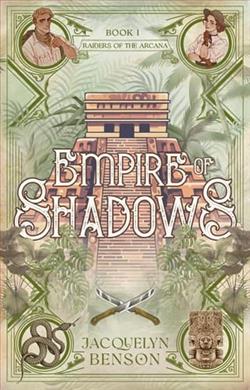
Empire of Shadows by Jacquelyn Benson emerges as a riveting blend of historical fiction and magical realism, intricately weaving a tapestry of adventure, espionage, and supernatural elements. Set primarily in the early 20th century, Benson crafts a narrative that transports readers to a tumultuous time of political intrigue and societal transformations, enriched with a compelling mystical twist that captivates and enthralls.
The novel follows the enigmatic protagonist, Catherine Radcliffe, a young woman of remarkable intellect and latent magical powers, who finds herself embroiled in a dangerous game of espionage during the height of World War I. Catherine’s journey is not just one of external conflict but also of internal discovery, as she navigates the complexities of her own abilities and the daunting world around her. Benson skilfully portrays Catherine as both vulnerable and formidable, crafting a character that is as complex as she is relatable.
One of the strengths of Empire of Shadows lies in its richly developed setting. Benson’s depiction of early 20th century Europe is vivid and evocative, capturing the essence of the era with a meticulous eye for detail. From the dimly lit streets of London to the opulent halls of a mysterious continental castle, the settings are not just backgrounds but characters in their own right, contributing to the story’s dense atmosphere and heightening the sense of intrigue.
The blending of historical and magical elements is handled with a deft touch by Benson, who ensures that the incorporation of magic feels both natural and necessary to the narrative. Magic in Catherine’s world is not omnipotent but is instead woven subtly into the societal and historical fabric of her time. This nuanced approach allows the supernatural aspects of the story to enhance rather than overshadow the historical and personal stakes at play.
The pacing of the novel is another commendable aspect. Benson masterfully balances fast-paced action sequences with slower, introspective moments, allowing readers time to ponder the implications of the unfolding plot while also keeping them firmly on their toes. As Catherine delves deeper into the spy network known as "The Empire of Shadows", the reader is taken on a whirlwind of twists and turns, each more surprising than the last. The suspense is palpable, making the book hard to put down.
Benson's exploration of themes such as duty, loyalty, identity, and the nature of power is both thoughtful and provocative. Through Catherine’s interactions with a diverse cast of supporting characters, the novel examines the ways in which personal relationships can intersect with and influence geopolitical landscapes. These characters, from a stoic British intelligence officer to a visionary scientist, are well-crafted and contribute significantly to the narrative’s depth and emotional impact.
Despite its many strengths, Empire of Shadows is not without its minor flaws. At times, the dialogue can seem slightly anachronistic, momentarily pulling the reader out of the period setting. Additionally, the complex plot might be confusing for some, as it demands attention to detail and a good memory for the significance of each twist and turn. However, these issues do not significantly detract from the overall enjoyment of the novel.
Benson also deserves praise for her meticulous research, evident in both the historical accuracies and the imaginative yet plausible magical elements. The author’s note at the end of the book provides fascinating insights into the real historical events and figures that inspired the story, adding an educational layer to the reading experience.
In conclusion, Empire of Shadows by Jacquelyn Benson is a standout novel that offers a captivating blend of history, magic, and intrigue. With its strong, complex heroine, rich historical setting, and carefully crafted magical elements, the book is a compelling read for fans of historical fiction and fantasy alike. Benson’s skillful storytelling ensures that readers are not just observers but are fully immersed in Catherine’s world, experiencing her fears, triumphs, and dilemmas as if they were their own. This novel is a testament to the power of blending genres to create fresh, engaging stories that resonate with a wide audience.



