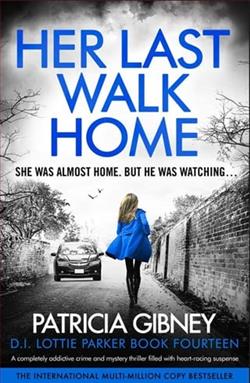
"Her Last Walk Home" by Patricia Gibney is an evocative piece of crime fiction that entices readers into the depths of a small town cloaked in mystery and fraught with buried secrets. Gibney, who is known for her meticulous crafting of psychological thrillers, weaves a tale so gripping and intricately plotted that it promises to hold its audience captive until the very last page.
The story revolves around Detective Lottie Parker, a character familiar to Gibney’s readers but still resonant and fresh in this new installment. The setting is the seemingly tranquil town of Ragmullin, where the calm of an early morning is shattered by the discovery of a woman’s body on a desolate path. The title “Her Last Walk Home” suggests the tragic final journey of Naomi Flanagan, whose lifeless body sets off a series of events that dredges up the past and reveals the dark underbelly of the town.
Gibney excels in her character development, portraying Lottie Parker with layers that are peeled away through her interactions and the challenges she faces. Here, Lottie is not just a detective but a mother grappling with her own domestic troubles, her personal life skillfully interwoven with the central mystery. This blending adds a rich texture to the narrative, making Lottie a relatable and deeply human protagonist.
The narrative is robust, driven by a potent mix of suspense and meticulous police procedural details. Gibney's prowess in unfolding the procedural aspects of the crime is impeccable, providing readers with a realistic glimpse into the investigation’s nitty-gritty. This realism is not just limited to the portrayal of police work but also extends to her handling of human emotions and the town's atmosphere.
As the investigation progresses, the plot thickens with several twists that are both surprising and plausible—a hallmark of Gibney’s writing. Every revelation about Naomi’s life adds complexity to her character, challenging the reader's assumptions and providing a deeper psychological edge to the unfolding drama. The author masterfully manipulates the pace and tension, creating a vortex that pulls readers deeper into the mystery.
One of the most compelling aspects of "Her Last Walk Home" is how Gibney tackles themes such as domestic violence, betrayal, and the consequences of the past intruding upon the present. These themes are not just plot devices but are woven into the narrative to question and reflect on the societal norms influencing the characters' lives.
Additionally, the supporting cast of characters is just as well-developed and integral to the story. From the suspicious, grizzled characters who inhabit the town’s fringes to Lottie’s own fractured family, each adds layers of intrigue and humanity to the narrative. The dynamics between these characters reflect a broad spectrum of relationships, each contributing to the complexity of the investigation.
Gibney's sharp, evocative prose cuts to the heart of the emotional landscape she portrays. Her descriptions of Ragmullin conjure images that are vivid and atmospheric, from fog-laden mornings to the stifling stillness of closed rooms, enhancing the overall eerie mood that is typical of the finest crime thrillers.
In conclusion, "Her Last Walk Home" by Patricia Gibney stands as a testament to her skill in crafting deeply immersive and thrilling detective stories. The novel not only delivers a compelling mystery but also delves deeply into the psyches of its characters, presenting a layered narrative that is both engaging and thought-provoking. For those who are drawn to intricate puzzles and richly drawn characters, this book is an enthralling and satisfying read that marks another high point in Gibney’s career. This book is highly recommended for fans of the genre looking for a story that provides both heart-pounding suspense and significant emotional depth.



