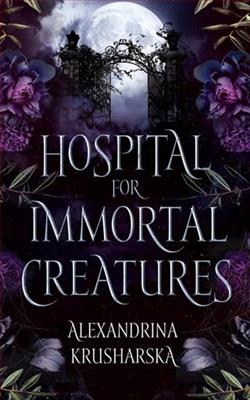
Hospital for Immortal Creatures by Alexandrina Krusharska is a fascinating foray into a world where the whimsical and the macabre blend seamlessly. Krusharska crafts a narrative that is both unique and compelling, set in a universe where immortality is a curse that comes at a high cost, and where a hospital exists to manage the ailments of beings who cannot die.
The novel opens with the hauntingly beautiful description of the Hospital itself, looming over a cliffside like a monolith of ancient times, its walls echoing with secrets. The protagonist, Eleanor, is a young nurse who has recently started working at this mysterious establishment. As we delve into her experiences, the reader is drawn into a web of intrigue and dark secrets that reveals the hospital is no ordinary medical facility. Instead, it is a place where mythical creatures and immortals seek respite from their endless lives and unique afflictions.
What stands out in Hospital for Immortal Creatures is Krusharska's rich, vivid prose that paints a captivating picture of the hospital's eerie corridors and its unusual patients—ranging from forgotten gods suffering from existential despair to mythical beasts with ancient injuries. Her ability to humanize these immortal beings, offering glimpses into their eternal struggles, creates a poignant narrative that questions the nature of life and suffering.
The plot is complex, woven with multiple threads that explore both the personal history of Eleanor and the vast, timeless histories of the immortals she tends to. The juxtaposition of their eternal perspectives with Eleanor’s transient human existence serves as a fertile ground for exploring themes of mortality, loneliness, and the human condition. As Eleanor uncovers more about her patients and the hospital’s purpose, she also unravels mysteries about her own past and her inexplicable connection to this timeless place.
Krusharska brilliantly uses the hospital as a metaphor for the isolation that immortality can bring, and the narrative is brimming with philosophical underpinnings that are both enthralling and deeply moving. Characters are developed with great care, each backstory contributing to the rich tapestry of the novel's world. The enigmatic Dr. Lachesis, the hospital’s director, is particularly memorable; his ambiguous nature and mysterious motives play a crucial role in the suspense and drama of the story.
The emotional depth of the book is one of its strongest points. Moments of joy, sorrow, and terror are crafted with such skill that they remain with the reader, echoing the unending lives of the characters. The interactions between Eleanor and her immortal patients often oscillate between clinical detachment and profound, emotional connections, reflecting the novel's exploration of the boundaries between duty and empathy.
However, the novel’s complex plot and the sheer abundance of characters with their intricate backstories can sometimes feel overwhelming, making it a bit challenging to keep track of the multiple storylines weaving in and out of the main narrative. Despite this, Krusharska manages to handle the pacing well, gradually unraveling the mysteries in a manner that mostly maintains the reader's interest and curiosity.
In the literary world where fantasy can sometimes tread too familiar paths, Hospital for Immortal Creatures offers a refreshing narrative. It is imaginative and bold, questioning through its fantasy lens, some of the most fundamental human concerns about life, death, and what lies in between. Krusharska’s narrative encourages the reader to ponder about the values of life and the shadows of immortality—a task that she handles with elegance and a deep sense of empathy.
In conclusion, Alexandrina Krusharska's Hospital for Immortal Creatures is a compelling blend of fantasy and philosophy. With its intricate plot, engaging characters, and a setting that combines the eerie with the existential, the book is a significant contribution to the fantasy genre. It offers not just an escape into an alternate world, but also a mirror reflecting some of the most poignant aspects of human existence. This novel is highly recommended for readers who enjoy deep, thought-provoking fantasy that challenges the boundaries of traditional storytelling.



