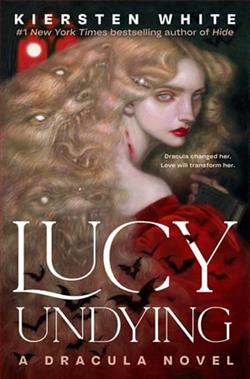
In "Lucy Undying," Kiersten White crafts a narrative that is as haunting as it is mesmerizing, firmly planting her story at the intersection of horror, romance, and speculative fiction. This novel stands out in its ability to blend existential meditations with gripping, emotional storytelling, making it a standout addition to the genre of supernatural tales.
The story centers around Lucy, who, after a tragic and sudden death, finds herself not in the afterlife, but rather mysteriously lingering in the world of the living. She is not a mere ghost, however; Lucy discovers that she possesses the unsettling ability to inhabit and control the bodies of humans. What follows is a dark and thoughtful exploration of what it means to be alive, have agency, and the lengths one will go to hold onto—or relinquish—control over one's fate and impact on others.
White's prose is rich and atmospheric, effectively drawing readers into a world that feels eerily close to our own—with a chilling supernatural twist. Her ability to describe scenes vividly brings the story’s ghostly elements to life, while also encapsulating the emotional weight of Lucy's existential crisis and her unsettling new reality. White uses a descriptive, almost poetic style that complements the eerie and introspective nature of the novel superbly.
One of the novel’s strongest points is certainly its character development. Lucy, as the central figure, is meticulously crafted. As readers journey with her through her new existence, they are privy to her internal conflicts—her grappling with the loss of her human life, her fear and anger at her circumstances, and her deepening confusion about her own identity and morality. All these elements combine to create a protagonist who is not only deeply flawed but also incredibly compelling and relatably human, despite her supernatural state.
Supporting characters are equally well developed. From the still-living individuals whom Lucy encounters (and occasionally inhabits), to other supernatural beings she meets along her journey, each character is vividly and uniquely portrayed. Their interactions with Lucy help to mirror and magnify the novel's central themes of identity, consent, and the human condition. The dynamics between these characters and Lucy add a rich layer to the narrative, creating moments of true emotional resonance that underscore the novel’s darker, more unsettling sequences.
The themes of "Lucy Undying" are what set it apart as particularly thought-provoking. The novel digs deep into the ethics of immortality and influence, showcasing the moral ambiguities and psychological impacts of possessing power over others. It questions the boundaries of self and other, and the ethical limits of survival at the expense of another's autonomy. White does not shy away from difficult questions, nor does she provide easy answers, prompting readers to think critically about the complexities of the human psyche and moral philosophy.
Moreover, the structure of the story is ingeniously laid out, with White pacing the revelations and twists in a way that maintains suspense and intrigue throughout the entire novel. Just as the tension reaches a peak, White masterfully shifts gears or provides crucial insights that propel the story forward and deepen the narrative complexity.
If there is any drawback to "Lucy Undying," it may be found in its intensely somber tone, which, while appropriate to the story, can occasionally feel overwhelming. Likewise, the philosophical pondering, though insightful, can sometimes slow the narrative momentum. However, these are minor critiques in what is otherwise a compelling and beautifully written book.
In conclusion, "Lucy Undying" by Kiersten White is a brilliantly-executed novel that challenges as much as it entertains. It combines horror, philosophy, and intricate character development to create a deeply thought-provoking reading experience. This novel is a strong recommendation for those who appreciate a cerebral approach to the supernatural genre, intertwined with piercing emotional insights and ethical dilemmas that linger with the reader long after the last page is turned.



