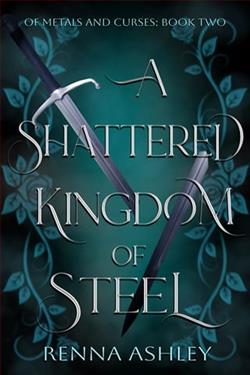
A Shattered Kingdom of Steel by Renna Ashley delivers an enthralling mixture of high fantasy and political intrigue, weaving a tapestry rich with conflict, mystery, and relentless ambition. This novel, likely the first in a series, sets a grand stage, introducing us to a vivid world where the echoes of clashing swords reverberate against a rugged political landscape.
The story centers on the young warrior, Elara, who finds herself unexpectedly ascending to the leadership of the Steelborne Legion after the mysterious death of her father. Her kingdom, once prosperous and peaceful, is now teetering on the brink of an all-out war. The surrounding realms, once allies, now eye Elara’s domain with envious and rapacious gazes, stirred by the scent of civil unrest and weakened defenses.
Ashley’s prowess in character development shines brightest with Elara. Over the course of the novel, Elara evolves from a reluctant warrior, burdened by sudden power, into a cunning leader. Her transformation is not just about personal growth but also about adapting to the necessities of her position, about how the realities of power reshape an individual. Ashley delicately balances Elara's internal struggles with her external challenges, creating a multi-dimensional protagonist who is both heroic and deeply human. The supporting characters, from the stoic and secretive advisor Kael to the brash and ambitious rival commander Marzan, are equally compelling, each adding depth and complexity to the unfolding drama.
One of the standout features of A Shattered Kingdom of Steel is its world-building. Ashley crafts a universe rich with history, culture, and tradition, all of which play integral roles in the plot. The political structures are intricate, and Ashley does a commendable job explaining alliances and enmities without overwhelming the reader with exposition. The descriptions of settings—from the austere, imposing fortresses of the Steelborne Legion to the lush, deceitful courts of the rival Kingdoms—are vivid and evocative, transporting the reader effortlessly into a world that feels as real as it is fantastical.
The pacing of the story is judiciously handled, mixing fast-paced battle scenes with brooding moments of political scheming and personal reflection. Ashley has a knack for tension, skillfully building suspense and releasing it in satisfying bursts. However, there are moments, particularly in the middle sections of the book, where the pace sags slightly under the weight of too many political discussions. While these contribute significantly to the depth of the narrative, they occasionally stall the momentum of the story.
Thematically, the novel explores the burdens of leadership and the loneliness it can entail. It also delves into the realms of betrayal, loyalty, and the often-blurred line between the two. These themes are particularly resonant in today’s world, making A Shattered Kingdom of Steel not just an escape into fantasy but also a reflection on the timeless challenges of governing and command.
There are also subtle undertones of romantic elements, especially in Elara's interactions with Kael. Ashley handles these with a light touch, ensuring that they enrich the plot without overshadowing the main narrative thrusts of war and leadership. The romance is tentative, fraught with the pressures of duty and the harsh realities of their world, which adds another layer of tension and human interest to the story.
Ironically, for all its strengths, the book’s ending feels somewhat abrupt. While it’s clear that Ashley is setting the stage for a sequel, some readers might find the conclusion a bit unsatisfying as several key plot threads are left dangling. However, this also serves as a compelling hook for the next installment in the series.
In conclusion, A Shattered Kingdom of Steel by Renna Ashley is a robust and riveting entry into the fantasy genre. With its intricate plot, well-drawn characters, and spectacular world-building, it promises to be the beginning of a series that will captivate readers eager for a blend of swordplay, sorcery, and intricate politicking. Ashley’s novel is a powerful reminder of the enduring allure of epic fantasy and its ability to mirror our own trials and tribulations in a landscape that is at once alien and familiar.



