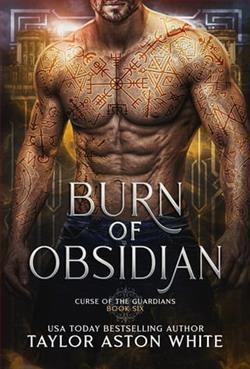
In "Burn of Obsidian," Taylor Aston White weaves a captivating tale of magic, intrigue, and personal discovery. Set in a meticulously crafted world where societal norms and mystical forces blend uniquely, this novel captures the reader's imagination from the outset. As a prominent new voice in the realm of fantasy, White's narrative prowess shines through, combining rich characterization with a vivid, dynamic setting.
The story follows the journey of Elara, a young woman who discovers her connection to the mystical obsidian stone—a source of powerful, but often dangerous, magic. As she unravels her family's secrets, Elara is thrust into a world of political intrigue and looming conflict. White deftly portrays Elara’s internal struggle with her identity and her powers, making her a relatable and deeply human protagonist.
One of White's greatest strengths in this novel is her ability to create layered and realistically flawed characters. Elara, with her fierce determination and vulnerability, is particularly well-drawn. Supporting characters, such as the enigmatic mentor figure, Dorian, and Elara’s unwavering friend, Tomas, are also given depth and compelling backstories that add richness to the tale.
The societal structure in "Burn of Obsidian" is another aspect that deserves mention. The author constructs a world where social stratification is interwoven with the fabric of magic itself—those with stronger magical abilities naturally rise to positions of power. This structure reflects and amplifies the real-world themes of inequality and the abuse of power, making the novel resonate with contemporary societal issues. The magic system itself is intricately detailed, with its own rules and limitations, which White explicates with skill, avoiding the common pitfall of overwhelming the reader with excessive exposition.
However, the novel does not solely rely on its fantasy elements. At its heart, "Burn of Obsidian" is a story about human emotions and relationships. White's writing beautifully captures the complexities of love, friendship, betrayal, and loyalty. The dialogue is sharp and often filled with a tension that propels the story forward, making each conversation significant and loaded with meaning.
The pacing of "Burn of Obsidian" is mostly well-handled, with a steady build-up leading to a thrilling climax. However, there are moments, particularly in the middle section, where the pace slows slightly, which might test the patience of some readers. Nonetheless, these slower sections are often laden with important character development and beautiful, descriptive prose that paints the scenes vividly.
Another commendable aspect of the book is its thematic depth. It doesn't shy away from tackling heavy themes such as morality, the nature of power, and the struggle for identity. White navigates these themes with a delicate balance, weaving them naturally into the fabric of the narrative. The moral quandaries faced by Elara lend the story a philosophical air that enriches the reading experience, inviting readers to ponder questions that extend beyond the confines of the book’s pages.
Visually, White’s descriptions are evocative and atmospheric. From the dark, shimmering surfaces of obsidian artifacts to the stark landscapes that Elara travels through, the settings are almost cinematic. White's use of imagery is not just picturesque but also serves to enhance the mood and tone of various scenes, engaging the reader’s senses and emotions thoroughly.
However, "Burn of Obsidian" is not without its faults. While the novel’s conclusion is satisfying and ties up most narrative threads neatly, some readers might find certain resolutions a bit convenient. Additionally, while the book is inclusive in terms of character diversity, there are places where more exploration of certain cultures within the world would have given the society depicted even greater realism and depth.
In summary, Taylor Aston White's "Burn of Obsidian" is a formidable entry into the fantasy genre. With its compelling protagonist, intricate world-building, and poignant exploration of complex themes, it offers much for both avid fans of the genre and newcomers. The novel’s minor pacing issues and occasional predictability are easily overshadowed by its strengths, making it a recommended read for anyone looking for a fresh and engaging fantasy saga. Through "Burn of Obsidian," White not only entertains but also invites reflection on deeper existential questions, crafting a story that lingers in the mind long after the final page is turned.