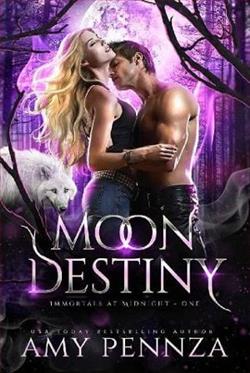
Moon Destiny by Amy Pennza is an intriguing blend of science fiction and romance, woven into a narrative that captures the complexity of both human and otherworldly challenges. The book takes readers on a journey with its strong-willed protagonist, Elara, a skilled botanist who finds herself caught in an interstellar quandary that tests her professional acumen and her heart.
The story unfolds on a newly colonized planet, Lunara, where Elara has been sent to oversee the development of sustainable plant life, essential for the colony's survival. Pennza immediately pulls the reader into a vividly described alien world, where the flora and fauna are both enchanting and dangerous—a backdrop that mirrors Elara’s own mysterious allure and latent peril. The author’s attention to detail in crafting the setting adds a rich layer of depth to the story, making Lunara almost a character in its own right.
The core of Moon Destiny dwells on the blossoming relationship between Elara and Corin, a native of Lunara. Corin is depicted with an intricate blend of otherworldly features and human emotions, his duality embodying the essence of all personal and external conflicts in the narrative. Through their relationship, Pennza explores themes of trust, cultural integration, and the ethics of human impacts on new ecosystems. This romantic subplot is not merely an accessory to the plot but serves as a critical conduit through which the broader themes of the novel are explored and understood.
While the romance between Elara and Corin offers much of the emotional and philosophical meat of the book, Pennza does not shy away from the sci-fi elements. The technology described in her colonization efforts imagines a future that is both aspirational and grounded in practical challenges. Readers will appreciate the realistic portrayal of scientific obstacles and the innovative solutions that come into play, giving the story a credibility that often lacks in more fantastical sci-fi romances.
Amy Pennza excels in her character development, with protagonists who are robust and well-rounded. Elara’s confidence and intelligence are refreshingly coupled with moments of vulnerability and doubt, which renders her character both authentic and relatable. Additionally, the interpersonal dynamics amongst the secondary characters provide further dimension to the narrative, offering subplots that are engaging without detracting from the central storyline.
The narrative is well-paced, creating an effective ebb and flow of tension and relief as the story progresses towards a climax that is both satisfying and thought-provoking. The balance between character-driven scenes and plot-forwarding action is well managed, ensuring that readers are neither overwhelmed by technical exposition nor lost in introspective narrative.
However, Pennza’s attempt to address large, overarching societal issues sometimes feels overwhelming given the scope of a single novel. The themes of colonial impact and environmental sustainability are vast and complex, and while these are commendably acknowledged, they at times weigh down the narrative. This is particularly palpable in sections where the romance seems to take a sudden backseat, making the story feel momentarily unbalanced.
It is also worth mentioning that Moon Destiny contains layers of story that might demand a bit from readers who are looking for a light, straightforward read. The scientific and cultural intricacies that make the book a valuable piece of literature also demand a degree of engagement that might not suit all tastes.
In conclusion, Moon Destiny by Amy Pennza is a compelling read that does a remarkable job of intersecting hardcore science fiction with deep romantic elements. Pennza sketches not only a convincing portrayal of a distant future but also the timeless narratives of love, conflict, and identity. While slightly ambitious in its thematic pursuits, the book is a testament to Pennza’s ability to envelope readers in a fully realized world that is as thought-provoking as it is visually and emotionally engaging. This novel is recommended for fans of sci-fi and romance alike, especially those who appreciate a literary approach to exploring the ethical and existential questions of our future in space.



