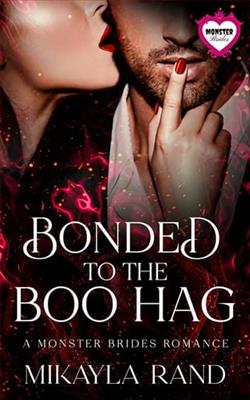
Bonded to The Boo Hag by Mikayla Rand is a fantastical journey blending elements of Southern folklore with a fresh twist on paranormal romance. It isn’t merely a tale of the supernatural, but an engrossing reflection on identity, love, and the power of heritage. Throughout its spellbinding pages, Rand weaves a narrative that is both thrilling and thought-provoking, ensuring that the reader is captivated from beginning to end.
The book revolves around the protagonist, Claudia, a young woman from a small Southern town with a haunting past that colors her present. Her life takes an unexpected turn when she discovers her connection to the Boo Hag, a creature straight out of Gullah culture. According to lore, the Boo Hag is a skinless witch that preys on humans by riding them in their sleep, stealing their energy and essence. Rand takes this chilling entity and reimagines it with a complexity that challenges the traditional villain mold.
Claudia’s encounter with the Boo Hag does not just thrust her into the hidden supernatural world but also into a profound quest of self-discovery. The narrative brilliantly uses the folklore of the Boo Hag as a metaphor for exploring themes such as the struggle with personal demons, the search for one's identity, and the fight against external control. These themes are universal, but Rand’s contextualization in a Southern setting rich with Gullah culture adds a unique and compelling layer to the narrative.
One of the strengths of Bonded to The Boo Hag is Rand's ability to create multidimensional characters. Claudia, as the protagonist, is written with depth and complexity. She is not simply a victim of her circumstances but an active participant in her fate, who battles through her fears and prejudices towards a poignant evolution. Her relationship with the Boo Hag evolves similarly; starting with fear and animosity, it develops into something much more nuanced, reflecting the intricacies of her own inner transformations.
Supporting characters in the novel also add rich layers to the storyline. From Claudia’s grandmother, who serves as a bridge between the old world and the new, to her childhood friend James, whose own story arc of redemption interweaves with the main plot, each character complements the story’s depth. This not only enhances the main narrative but enriches the setting and themes, making the cultural and supernatural aspects of the story more accessible and impactful to the reader.
Rand’s writing style is lush and evocative, capable of crafting atmospheres that are palpably tense yet enchantingly mystical. Her descriptions of the Southern landscapes are vivid, and her portrayal of supernatural elements is both eerie and beautiful. The pacing of the story is well-handled, with a good balance of tension-filled scenes and quieter, more introspective moments. Rand manages to maintain suspense about the true nature of the Boo Hag and Claudia’s connection to it, driving the narrative forward compellingly.
The book also excels in its exploration of Gullah culture, a lesser-known aspect of African American heritage. Rand does not merely use this as a backdrop but makes it central to the narrative, honoring its traditions and folklore with sensitivity and depth. This not only sets the novel apart in the realm of paranormal romances but also educates readers in a captivating way, enhancing their understanding of a vibrant cultural heritage.
However, it is worth mentioning that some readers might find the blend of intense folklore and romance a bit daunting if they are not familiar with Gullah culture or Southern folklore. While Rand provides enough context to not alienate unfamiliar readers, the depth and complexity of cultural elements require a willingness to immerse oneself fully into a world that is both spectacular and intricate.
In conclusion, Bonded to The Boo Hag by Mikayla Rand is a compelling read that offers more than just chills and thrills. It is a thoughtful exploration of identity, cultural heritage, and transformation through the lens of the paranormal. With its rich narrative, well-crafted characters, and respectful nod to Gullah culture, the book stands out as a formidable contribution to its genre. Any reader looking for a story that seamlessly integrates folklore, psychological depth, and romance will find this book a deeply satisfying read.



