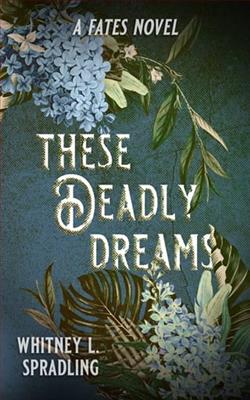
These Deadly Dreams by Whitney L. Spradling is a book that masterfully weaves suspense and intrigue into a captivating psychological thriller. Charting the descent of its protagonist into a maelstrom of haunting dreams and grim realities, Spradling has penned a novel that not only delves deeply into the psyche of its characters but also keeps readers on the edge of their seats from beginning to end.
The story revolves around Carter, an art student with aspirations of making a landmark in the exceptionally competitive world of animated filmography. Carter's life takes an unexpected turn when he starts experiencing vivid, unsettling dreams which quickly bleed into his waking life, blurring the lines between what’s real and what’s imagined. These aren't ordinary dreams; they begin to manifest as premonitions, revealing dark secrets about the people around him, leading to distrust and paralyzing fear.
Spradling's writing style is eloquent yet accessible, characterized by its rhythmic flow and compelling narrative pace. The descriptions are vivid, often chillingly so, ensuring that the reader is transplanted right into the center of Carter's nightmarish experiences. The dialogues are crisp and natural, enhancing the realism of the characters and their predicaments.
One of the book's strongest points is its adept characterization. Carter, as the protagonist, is fleshed out with a profound depth that encompasses his aspirations, fears, and intrinsic vulnerability. He is not merely a victim of his circumstances but is portrayed with a complexity that invites both sympathy and critique. Supporting characters, from Carter’s supportive yet skeptical friend Jenna to his mentor Professor Dawkins, are equally well-crafted, each adding a vital layer to the unfolding drama.
The thematic exploration of dreams versus reality is handled with finesse, avoiding clichés and instead presenting a fresh take on the subject. Spradling uses the motif of dreams not only as a plot device but also as a way to explore deeper questions about identity, control, and the human psyche. The interplay between different realities is seamless and often leaves the reader questioning the nature of perception.
A notable aspect of the novel is its setting, which plays a significant role in amplifying the eerie atmosphere that defines the book. The art school, with its old architectural charm and hidden corners, becomes a backdrop that is both creatively enriching and hauntingly isolating. The environment mirrors Carter's internal turmoil, acting almost as a character on its own.
The plot of These Deadly Dreams is tightly knit, with twists and turns that are both surprising and satisfying. Just as the reader believes they have grasped the direction of the narrative, Spradling introduces a new element or revelation that shifts perspectives and reengages interest. This dynamism ensures that the suspense remains taut throughout the novel, culminating in a climax that is both dramatic and thought-provoking.
However, while the intricate plot is one of the book’s strengths, it can also be a double-edged sword. There are moments where the complexity of the story might overwhelm casual readers, or where the distinction between dreams and reality becomes a tad too ambiguous. While this does amplify the psychological aspect of the novel, it requires the reader to pay close attention to detail to fully appreciate the nuances.
In conclusion, These Deadly Dreams is a compelling psychological thriller that skilfully blends elements of suspense, horror, and drama. Whitney L. Spradling has created a mesmerizing world where dreams dictate reality, and the fine line between truth and perception is relentlessly questioned. The book is a testament to Spradling's imagination and ability to create a tightly woven, intense narrative that captures and holds the reader's attention until the very last page. It is highly recommended for those who seek a story that challenges their perceptions and satisfies their appetite for mystery and psychological depth.



