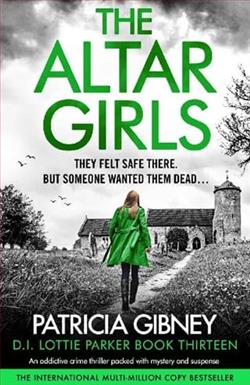
The Altar Girls by Patricia Gibney is an engrossing novel that combines elements of mystery, thrill, and psychological depth in a narrative that captures the reader from the first page. Set in the Irish town of Ragmullin, the story delves into the deeply entrenched secrets of a community shadowed by its seemingly serene exterior. Gibney, well-known for her Detective Lottie Parker series, steps into a slightly different domain with this standalone novel, yet retains the gripping storytelling and complex character development that fans have come to expect.
The novel opens with a haunting scene reminiscent of classic thrillers: a young altar girl vanishes after her first communion. Her disappearance rekindles dark memories and stirs the murky waters that many in Ragmullin would prefer remained undisturbed. The protagonist, Detective John Tully, a seasoned yet emotionally scarred detective, is tasked with unraveling the mystery. Gibney skillfully portrays Tully’s complex personality, marked by his own troubled past, making him both deeply empathetic and profoundly flawed. His pursuit of the truth is not just a professional obligation but a personal crusade, driven by his own demons and a desperate need for redemption.
As the investigation unfolds, the narrative weaves through the perspectives of several characters, each adding layers to the multifaceted plot. Among them is Maria, a former altar girl with a disturbing story, whose ties to the current events suggest that the past is never truly behind us. Gibney utilizes these multiple viewpoints effectively, crafting a tapestry of interconnected lives that reveal the societal and personal fractures of a small town. The depth given to each character reflects Gibney's deft hand at creating immersive, believable personalities that evoke both empathy and suspicion in the reader.
One of the standout elements of The Altar Girls is Gibney’s use of the small-town setting, which she turns almost into a character itself. Ragmullin, with its close-knit community and picturesque facades, offers a perfect backdrop for a mystery. It’s a place where everyone knows each other, or at least believes they do, thereby setting the stage for multiple revelations that challenge these assumptions. The setting enhances the story's tense atmosphere, making the town's snowy streets and shadowy corners repositories of secrets.
Gibney does an admirable job of balancing the suspenseful elements of the thriller genre with a deep dive into themes such as redemption, justice, and the impact of the past on the present. Rather than merely focusing on the "whodunit" aspect, the novel questions whether certain truths should be unearthed and at what cost. This philosophical query does not detract from the excitement of the narrative but rather adds a layer of complexity that elevates the book above a simple police procedural.
The pacing of the novel is meticulously crafted. Gibney manages the tension masterfully, leading the reader through a series of crescendos that build towards an unpredictable conclusion. The resolution of the mystery is satisfying yet leaves room for contemplation, a hallmark of a well-written thriller. Readers will find themselves pondering the moral nuances of the outcome, a testament to the thought-provoking nature of Gibney’s writing.
However, no novel is without its weaknesses. At times, the multitude of characters and their complex backgrounds can seem overwhelming, potentially confusing readers who prefer a more straightforward narrative. Additionally, the overlapping timelines, though generally well-handled, at times disrupt the narrative flow, requiring the reader to pay close attention to detail to fully grasp the intricacies of the plot.
In conclusion, The Altar Girls is a compelling read that showcases Patricia Gibney’s ability to blend suspense with deep character exploration and social commentary. The novel offers more than just a mystery; it is a profound examination of a community’s soul, scrutinized through the lens of crime and retribution. Fans of Gibney’s previous works will undoubtedly find much to admire here, and newcomers to her writing will be drawn into the dark yet irresistibly intriguing world she creates. As a standalone novel, it serves as both a satisfying mystery and a potent commentary on the consequences of uncovering truths in a world eager to maintain its façades.



