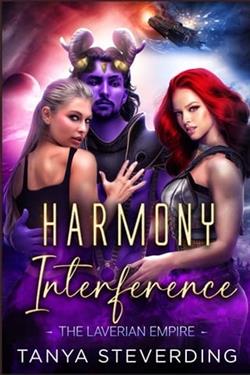
Harmony Interference: The Laverian Empire by Tanya Steverding is a noteworthy entrant into the ever-expanding universe of science fiction novels. Its title alone suggests a meticulous intermingling of abstract and fantastical concepts, which Steverding delivers with commendable competence. This review unpacks the various layers of the book, exploring its thematic depth, distinct characters, and the immersive world-building that allow it to emerge as a significant work in a crowded genre.
At the heart of the story is the complex interplay between harmony and interference, essentially exploring how both discord and concord can propel societies toward either stagnation or evolution. Nestled within the celestial confines of the Laverian Empire, the narrative pulsates with political intrigue, pioneering technology, and metaphysical debates, all drawn with a vibrant imaginative brushstroke that is as bold as it is meticulous.
The central plot orbits around the enigmatic character of Elysia, a Harmony Keeper whose role demands the maintenance of peace and order within the multiple planetary systems that comprise the empire. Elysia's journey, marked by internal conflicts and external challenges, provides a compelling hook. Her character doubles as both anchor and compass in the sprawling universe Steverding constructs—a universe teeming with alien races, futuristic tech, and the omnipotent threat of the Dissenters, who challenge the very fabric of societal structure and ethic.
Steverding’s development of Elysia reflects a deep understanding of character as a vehicle for theme. Elysia’s evolving perceptions and feelings regarding the empire and her role within it effectively mirror the broader existential and philosophic questions posed by the narrative. Through her eyes, readers experience the gravitational tension between duty and moral ambiguity, order and chaos, illustrating the often fractious relationship between individual agency and societal expectations.
However, it’s not only Elysia who shines. The secondary characters—ranging from the sage-like mentor Orion to the fiercely independent rebel leader Kryex—provide additional layers of perspective and conflict. The dynamics among these characters are crafted with a careful balance of dialogue and action, creating a rhythm in the narrative that captivates and carries the reader through complex plot twists and expansive lore. Each character is unmistakably individual, with motives and backstories that are as well-rounded as the universe they inhabit.
The world of Harmony Interference is undeniably vast and intricate. Steverding’s world-building skills are exemplary, weaving together elements of advanced science, alien psychology, and cosmic scale with a deftness that is both rare and exhilarating. The detailed descriptions of different planets, each with their unique ecosystems and cultures, add a rich texture to the narrative. Additionally, the political structures and the philosophical underpinnings of the Laverian Empire prompt deep reflections on our contemporary world issues, such as governance, liberty, and ethical leadership.
Despite its broad scope and ambitious themes, the novel is not without minor flaws. At times, the pacing suffers due to the sheer density of the lore and the meticulousness of the exposition. Certain passages, heavy with technical and historical details, may overwhelm some readers, slowing the momentum built by the ongoing action and character development. Nevertheless, these moments are more than compensated for in the sections where the narrative picks up pace and the action sequences unfold with cinematic clarity and intensity.
Moreover, Steverding’s prose deserves a special mention. It is both poetic and precise, capable of capturing grand cosmic phenomena and subtle emotional shifts with equal finesse. The language serves not just to describe but to evoke, crafting atmospheres that are as tangible as the tension that runs through the narrative’s core.
In conclusion, Harmony Interference: The Laverian Empire is an ambitious and deeply engaging read. Tanya Steverding offers a fresh voice in science fiction, one that does not shy away from the complexities of its world or its characters. While navigating through its extensive universe may demand a bit from the readers, the journey is undoubtedly rewarding, filled with intellectual stimulation and emotional resonance. This novel is recommended for those who appreciate sci-fi that both entertains and provokes thought, leaving a lasting impression long after the last page is turned.
As Steverding masterfully blurs the lines between chaos and order, interference and harmony, she invites her readers to ponder, what truly holds the universe together? Is it the rigid adherence to laws or the chaotic beauty of disorder? Through a narrative that is both expansive and intimate, Harmony Interference provides no easy answers, but instead, a mirror to our own galaxy-sized contemplations.



