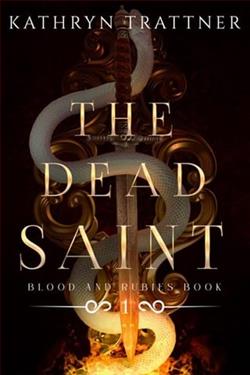
The Dead Saint by Kathryn Trattner takes readers on a hauntingly evocative journey through themes of love, loss, and redemption. The novel, set against the backdrop of a gothic landscape imbued with mystery and lore, captivates with its lyrical prose and deep, resonating emotions. Trattner’s ability to weave a complex narrative populated with well-developed characters and rich, atmospheric settings makes this book a compelling read for fans of both the supernatural and the profoundly human.
The story revolves around the protagonist, Lily, whose life takes an unexpected turn after the death of her beloved husband, Saint. The loss catapults her into a world of grief so deep and disorienting that she starts to see visions of Saint in her dreams. These dreams, however, begin to bleed into reality, leading Lily on a quest not just for closure, but for understanding the boundaries between life and death, love and oblivion. The novel deftly explores the concept of mourning and the coping mechanisms that individuals deploy to process grief, making it a profound study on human resilience and vulnerability.
Trattner's writing style is particularly noteworthy for its poetic elegance and fluidity. Her descriptions of the ethereal and the mundane are seamlessly interwoven, creating a tapestry of imagery that vividly paints the dual worlds Lily inhabits—the real and the spectral. Through this duality, the novel probes deep philosophical questions about the afterlife and the connection between the soul and the earthly body, making readers ponder their own beliefs and experiences with loss.
The characters in The Dead Saint are intricately crafted, with each one adding depth and perspective to the narrative’s rich tapestry. Saint, although deceased from the beginning, is a powerful presence throughout the book, influencing Lily’s journey in ways that transcend the physical realm. His characterization is slowly unpacked through Lily’s recollections and the surreal interactions she believes to be true, giving the reader a deep sense of the impactful, albeit complex, relationship they shared. Other supporting characters, like Lily’s skeptical friend Rhea and the enigmatic psychic Madame Evangeline, provide contrasting viewpoints that enrich the narrative, offering both skepticism and belief, which mirror the internal conflict faced by Lily.
The setting of the novel, an unnamed, mist-covered town by the sea, adds an additional layer of mystique and allure. Trattner’s skill in setting scenes is evident as she describes the fog-laden streets, the ancient cemetery overlooking the waves, and the quaint small-town vibe that juxtaposes eerily with the supernatural elements of the story. This setting not only enhances the gothic undertone of the novel but also metaphorically reflects Lily's blurred reality.
A key strength of the novel lies in its pacing and structure. Trattner manages to keep the suspense taut, making each revelation about Saint and the spiritual realm both surprising and satisfying. The interplay between past and present is handled skillfully, with flashbacks interspersed in a way that adds to the narrative rather than detracting from the tension of Lily’s current predicament. Furthermore, the climax of the novel is both unexpected and emotionally potent, delivering a resolution that is thoughtful and resonant, though steeped in ambiguity that leaves room for reflection.
However, while The Dead Saint is largely successful, some readers might find the heavily stylized language and the slow burn of the narrative a bit taxing. The deeply introspective nature of the story, combined with its elaborate prose, may not cater to those looking for a more straightforward or action-driven plot. Nonetheless, for those who appreciate a story that delves into the complexities of human emotions and the supernatural with poetic finesse, this book will be a treasure.
In conclusion, Kathryn Trattner's The Dead Saint is a beautifully written, thought-provoking novel that tackles the themes of love, grief, and redemption with a delicate yet poignant touch. It is a meditative and immersive read that challenges the boundaries between the real and the spectral, making it a standout addition to the genres of supernatural and literary fiction. For readers interested in a journey that explores the depths of human emotion through a supernatural lens, The Dead Saint is a must-read.



