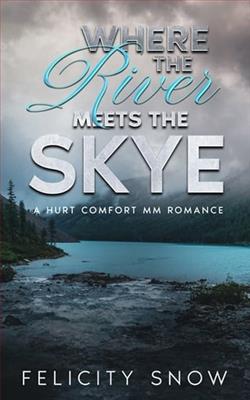
Where the River Meets the Skye by Felicity Snow is a poignant and beautifully crafted novel that explores the intricate web of human emotions set against the evocative backdrop of the Scottish Highlands. The story provides a panoramic view of the lives of its characters, intertwining themes of grief, love, redemption, and the enduring question of fate versus choice.
The book follows the protagonist, Eliza MacKay, a young woman burdened with loss and the ambiguity of her future. Eliza, a native of the small Scottish town of Inverallen, returns to her homeland following the sudden death of her mother. The narrative elegantly unfolds as Eliza rediscovers her roots and confronts the ghosts of her past. Snow’s portrayal of Eliza is both deep and relatable, making her journey a profound experience for the reader.
Snow’s prose is a standout feature of the novel. The lush descriptions of the Scottish wilderness, with its rolling hills, misty lochs, and ancient ruins, are not merely a setting but a character in itself. The atmospheric detailing serves as a perfect foil to the characters’ emotional landscapes, enhancing the story's mood and tone. It is in this setting that Eliza meets Calum, a reclusive artist with secrets of his own. Snow deftly captures the slow-building chemistry between Eliza and Calum, weaving a love story that is as unpredictable as the Scottish weather.
The secondary characters are equally well-drawn, each adding depth and complexity to the narrative. From Mrs. MacIntyre, the innkeeper with a heart of gold and wisdom to spare, to Jamie, Eliza’s childhood friend grappling with his own demons, Snow creates a tapestry of interactions that enriches the main storyline. These relationships are portrayed with sincerity, and their developments are both heartwarming and heart-wrenching.
One of the novel's most compelling aspects is its exploration of grief. Snow handles this delicate theme with finesse, providing a nuanced portrayal of the various ways individuals cope with loss. The authenticity of the emotional responses depicted makes Where the River Meets the Skye not just a story about finding love but also about finding oneself amid profound pain. The psychological depth Snow brings to her writing prompts introspection and a resonant empathy from the reader.
The narrative is structured in a way that the lush landscapes and folklore of Scotland seamlessly integrate with the personal histories of the characters. The inclusion of local myths and legends, such as those about the water kelpies and the fae folk, adds a mystical element to the story, blurring the lines between reality and superstition. This not only enriches the atmospheric quality of the narration but also symbolizes the characters' internal struggles and transformations.
However, the novel does not shy away from pacing issues. There are moments, particularly in the middle of the book, where the story seems to stall. These sections, focusing extensively on day-to-day activities and interactions, although beautifully written, occasionally dampen the narrative’s momentum. Yet, these slower parts are counterbalanced by moments of intense emotional revelation and beautifully orchestrated climaxes, reminding the reader of life’s unpredictable ebbs and flows.
Felicity Snow's ending to the story is both satisfying and thought-provoking. Without venturing into the realm of spoilers, it can be said that the resolution of Eliza and Calum’s story is handled with both realism and hope. The author’s choice to leave certain threads slightly unresolved mimics life's very own open-ended nature, inviting the reader to dwell on the possibilities beyond the written word.
In conclusion, Where the River Meets the Skye by Felicity Snow is a vivid, emotionally gripping novel that transcends the traditional boundaries of its genre. It is a narrative rich with poetic descriptions, deep emotional resonance, and a vivid setting that captures the heart. The story of Eliza MacKay offers not only escapism but an evocative reflection on the complexities of coming home and moving forward. This novel will appeal to those who appreciate a story well-told, with all the beauty and brutality of what it means to be human.



