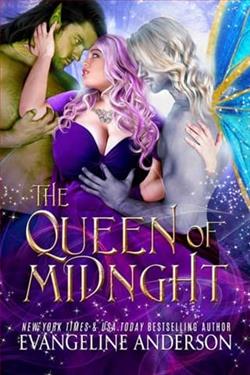
The Queen of Midnight by Evangeline Anderson is a compelling fantasy novel that intertwines elements of magic, intrigue, and romance within a richly developed world. Through its elaborate storytelling and thoughtful character development, Anderson invites readers into a dramatically ornate universe possessing a delicate balance between radiance and darkness. In this review, I will discuss the novel’s setting, character evolution, thematic depth, and the overall impact on its audience, providing a thorough analysis without delving into spoilers.
The story unfolds in the mystical world of Eldoria, a place where night and day exist as sovereign entities, ruled by their respective monarchs. At the heart of this tale is Shara, a young woman from the Day Court who discovers a daunting prophecy that predicts her transformation into the Queen of Midnight. The narrative kicks off with Shara’s previously mundane life taking a drastic turn, leading her into the shadowy realms of the Night Court. The dual setting of the radiant Day Court and the enigmatic Night Court is crafted with such vivid detail that Eldoria itself emerges almost as a central character in the plot.
Anderson’s strength lies in her ability to sculpt characters with depth and complexity. Shara, the protagonist, is portrayed with a genuine blend of resilience and vulnerability, making her both relatable and admirable. Her journey from a naive day dweller to a formidable figure in the nocturnal court is both credible and emotionally stirring. Meanwhile, the male lead, Ronan, who is the Prince of Night, provides a fascinating contrast to Shara. His enigmatic nature and dark demeanor add layers of intrigue and romantic tension to the narrative. The dynamics between Shara and Ronan are not merely a subplot but a pivotal essence driving the story forward. The supporting characters are equally well-rounded, contributing to the sprawling tapestry of courtly politics and ancient magic that defines Eldoria.
Themes of power, identity, and destiny are woven throughout The Queen of Midnight. Anderson explores these themes by challenging her characters’ perceptions of themselves and the roles they are expected to play in their society. The novel does an excellent job of depicting how personal battles with self-identity and duty can mirror larger societal conflicts, adding a layer of philosophical pondering to the high-stakes physical and magical battles. This thematic depth enriches the narrative, providing food for thought long after the last page is turned.
One of the most remarkable aspects of Anderson’s writing is her ability to maintain a fast-paced, engaging plot while ensuring emotional depth and character development. The blend of action scenes with heartfelt introspection and romantic encounters ensures that the pacing never feels monotonous. Elements of traditional fantasy are beautifully married with unique motifs and fresh twists that keep readers guessing. The incorporation of prophetic elements and the dichotomy between day and night are particularly compelling, providing a symbolic backdrop against which the characters’ journeys unfold.
The book’s stylistic elements also deserve acknowledgment. Anderson's prose is lush and evocative, capable of transporting readers directly into the heart of Eldoria. Her descriptions of the contrasting courts—with the luminescent, eternal daylight of one and the captivating, perpetual darkness of the other—are particularly poetic. The dialogue is sharp and reveals much about the characters’ personalities and evolving relationships without feeling forced or expository. Additionally, the romantic undertones are skillfully woven into the broader narrative, enhancing rather than eclipsing the primary storyline.
However, no book is without its flaws. Some readers might find the initial setup of the world and its rules a bit overwhelming, with a steep learning curve involved in the first few chapters. Furthermore, the central romance, while beautifully developed, occasionally borders on overshadowing the novel’s political intrigue elements, which could be a deterrent for those more interested in the machinations of courtly power dynamics than in romantic entanglements.
In conclusion, The Queen of Midnight by Evangeline Anderson is a vivid, enthralling fantasy that will appeal to readers of the genre seeking substantial character growth and a well-constructed, magical world. Anderson not only crafts a narrative that is both entertaining and thought-provoking but also challenges and expands the conventional boundaries of typical fantasy romance. This novel is a testament to the profound power of stories in exploring complex themes of love, power, and identity within an utterly fascinating literary tapestry. Overall, Anderson's latest offering is a compelling blend of magic, mystery, and heartfelt emotion, making it a must-read for fans of the genre.



