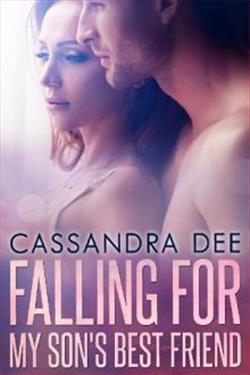
Falling for My Son's Best Friend by Cassandra Dee is a novel that delves into the enticing yet contentious realm of forbidden romance, exploring themes of love, desire, and the social implications of unconventional relationships. Cassandra Dee is known for her ability to blend steamy scenes with emotionally charged narratives, and in this book, she manages to maintain this delicate balance with a keen eye for detail and character development.
The story is centered around Emma, a middle-aged single mother who finds herself irresistibly drawn to her son’s best friend, Jason, a young man who is as charming as he is off-limits. The narrative smartly intertwines Emma’s internal struggle between her feelings and societal norms, offering a deep exploration of her psyche. Dee's portrayal of Emma is multifaceted—she is at once nurturing and desirous, embodying the conflict of her circumstances with palpable emotion.
Jason, on the other hand, is not simply sketched as a youthful seducer. Dee provides him a background that makes his attraction to the mature Emma plausible beyond mere physical desire. His emotional maturity, partly the result of his own familial experiences, makes him an intriguing counter to Emma’s more experienced yet vulnerable character. This depth deftly sidesteps what could easily have become a clichéd cougar narrative, lending credibility to their relationship instead.
The chemistry between Emma and Jason is palpable, with Dee masterfully crafting steamy scenes that are sure to raise the reader's heartbeat. These moments are not just gratuitous; they are windows into Emma’s reawakening and Jason’s earnest affection, elevating the novel from mere erotica to a more substantial romantic story. However, the erotic elements of the book do not overshadow its emotional core; rather, they complement it, making the romantic culmination between Emma and Jason feel all the more rewarding.
One of the book's strengths lies in its supporting cast—the residents of the small town who add color and conflict to the narrative. From the gossipy neighbors to Emma’s skeptical friends, Dee uses these characters to mirror the societal challenges and stigmas attached to age-gap relationships. This not only heightens the stakes but also broadens the conversation around love, age, and sexuality, which are central to the narrative.
Structurally, the novel maintains a brisk pace, with Dee employing a mix of dialogue and introspection that keeps readers engaged from start to finish. She skillfully uses tension—not just sexual, but social and emotional—to drive the story forward, leading to a climax that is as thought-provoking as it is satisfying. The conflict resolution, while somewhat predictable, offers a pleasing closure to the entangled emotions and societal judgments that Emma and Jason must navigate.
However, the book is not without its criticisms. Some may find the rapid development of Emma and Jason's relationship slightly unrealistic, given the complex weight of their initial circumstances. Additionally, deeper exploration into the consequences of their relationship on Emma’s relationship with her son could have added another layer of complexity and conflict, making their eventual coming together even more powerful.
In conclusion, Falling for My Son’s Best Friend is a provocative love story that tackles taboo subjects with sensitivity and sensuality. Cassandra Dee succeeds in telling a tale that is as much about the courage it takes to follow one's heart as it is about the passionate encounters that characterize the novel’s allure. This book is recommended for readers who enjoy romance that not only titillates but also thoughtfully questions societal norms and emotional boundaries. With its steamy scenes seamlessly integrated with emotional depth, Dee's novel is a compelling read that both entertains and provokes thought, making it a standout in the genre of erotic romance.



