Forsaking All Others
Author: Lily Michaels
Genre(s): Romance | Historical
Total pages: 184
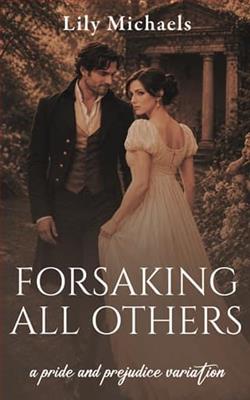
Forsaking All Others, A Pride and Prejudice Variation
If you love Mr. Darcy and Elizabeth Bennet and want to see them fall in love all over again, you will enjoy this retelling inspired by Jane Austen’s beloved novel, Pride and Prejudice.
When Elizabeth Bennet visits her younger sister at Hunsford Parsonage, she expects little more than quiet days, long walks, and the usual condescension of Lady Catherine de Bourgh. Instead, she meets Lady Catherine’s two handsome nephews, and the course of her future is altered forever.
Fitzwilliam Darcy is everything Elizabeth ought to distrust: proud, reserved, and far above her in consequence. Yet beneath his formal manners is a man of deep feeling, honor, and devotion. As Elizabeth comes to know him, she discovers that first impressions can be dangerously incomplete.
But love does not bloom without opposition. Family expectations, social barriers, dangerous secrets, and the schemes of those who would separate them all stand between Darcy and Elizabeth’s happiness. From Rosings Park to Pemberley and beyond, they must learn whether love is strong enough to overcome pride, fear, and the judgments of society.
Forsaking All Others is a clean Regency romance and standalone Pride and Prejudice variation inspired by Jane Austen’s beloved novel. Filled with romance, family drama, danger, and heartfelt emotion, this story follows Mr. Darcy and Elizabeth Bennet as they fall in love and choose one another against every obstacle.
While the relationship between Elizabeth and Darcy forms the heart of this reimagining, each of the Bennet sisters is likewise called to discover her own path.
Set within the world of Regency England, this story offers a thoughtful exploration of the choices, sacrifices, and quiet victories that shape both love and family.
This Pride and Prejudice variation departs from the original novel to explore a woman’s role within marriage and Regency society, as well as her ability to become the heroine of her own story. Set in a world where women possessed little independence and were expected to adhere to strict rules of conduct and propriety, the novel examines the strength, resilience, and quiet courage required to flourish within those constraints.
The story includes moments of romance and marital affection and, on occasion, touches with discretion upon the private tenderness shared between husband and wife. These scenes are handled with care and remain appropriate for readers who enjoy clean Regency romance.
For those who appreciate a more emotionally revealing portrayal of Darcy and Elizabeth, and who value stories of devotion, personal growth, and romantic tension, this variation offers a compelling interpretation inspired by the enduring work of Pride and Prejudice.
Features: • Friends-to-lovers • First meet at Rosings Park • Villainous schemes • Brooding hero • Courageous heroine • Slow-burn romance • Intrigue • Scheming Carolyn • Lydia rescued before ruin • Georgiana rescues herself • Richard Fitzwilliam and Anne de Bourgh • Clean, Closed Door • Happily Ever After
Share this Book





Treanding Books ...
- Hockey Nanny by Sasha Moon
- The Hitman’s Obsession by Jenna Rose
- Surrogate For My Best Friend’s Man 2 by Ro. J
- Possessive Mafia Bodyguard by Vivy Skys
- Brutal Bratva’s Owned Hostage by Rina Lawson
- Cole by Mila Kane
- Savage Little War by Lane Hart
- Dancing With Demons by Ruby Vincent
- Bleed by C.J. Primer
- One Filthy Kiss by Vivy Skys
- Diary of a Biker Queen by Elle Thorpe
- Owned By Royal by Cassi Hart



